
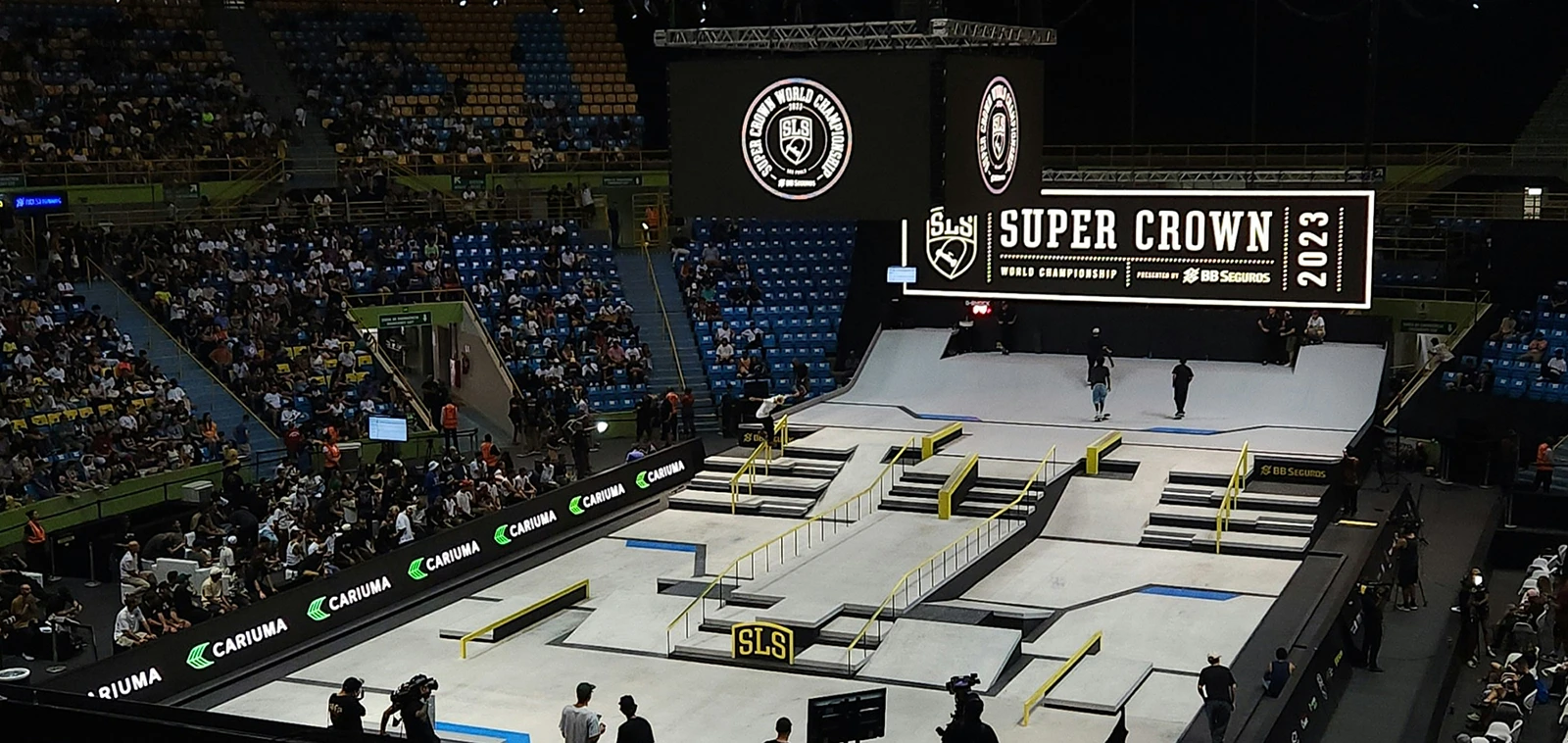
Since its launch in 2010, SLS has completely flipped competitive skateboarding on its head. This professional league pulled off something massive: turning an initially underground culture into a global spectacle, all whilst staying true to the highly technical, creative roots of street skating. Whether you’re a purist or a total newcomer, understanding how SLS works unlocks a world where elite technical performance meets artistic expression.
What is Street League Skateboarding (SLS)?
Street League Skateboarding is THE gold standard for professional street skating. This international circuit brings together the world’s elite in a standardised format where pure technique and consistency reign supreme. Forget chaotic contests; SLS is all about a structured approach with clear-cut rules and an objective points system.
The concept? A clinical, level playing field that allows every skater to perform at their absolute peak. The skateparks are meticulously designed to offer the very best in street obstacles: heavy rails, flawless ledges, stairs, and gaps. It’s a playground that closely mimics real street skating, fine-tuned to push the sport’s boundaries.
More than a competition : a skateboarding revolution
The result of this formula? A highly successful media platform, broadcast globally to millions of viewers (both live and on-screen), which has significantly popularised and professionalised the discipline. Naturally, this evolution has drawn in sponsors and partners, creating a stable ecosystem. Prize money finally allows pro skaters to comfortably make a living from their passion whilst continuing to push the technical limits of the sport.
Skateboarding at its absolute peak
The SLS roster isn’t just there to make up the numbers: the line-up is a true reflection of the world’s absolute elite. To even hope to step onto this circuit, skaters must prove they have exceptional technical ability and, crucially, an iron-clad capacity to perform under immense pressure. This ultra-rigorous selection process guarantees a show where any given run could potentially redefine the standards of skateboarding.
By faithfully recreating the urban environments where street skating was born, the league preserves the discipline’s authentic DNA whilst offering skaters the best possible conditions to shine.
How does an SLS event work?
The SLS format stands out with a distinct two-phase structure, each testing a different aspect of a rider’s talent. This approach crowns the ultimate all-rounders: those who can smash a full run, but also throw down highly technical, high-stakes individual tricks.
This split creates a breathless pace that keeps the crowd on the edge of their seats, whilst giving skaters the time they need to get in the zone. It’s a logical progression from the general to the specific, perfectly mirroring the philosophy of street skating.
The “Line” section : show your style in 45 seconds
During this first phase, it’s a race against the clock. Each skater gets exactly 45 seconds to string together a line across the park. Here, the judges are looking at creativity, flow between transitions, line originality, and overall execution.
Strategic choices are vital: do you play it safe with a clean, mastered run, or risk it all with heavier tricks that could yield massive points? Each rider gets two attempts to put down their run and fine-tune their approach. This setup strikes the perfect balance between the pressure of a live event and the chance to bounce back from a slam.
The “Single Tricks” section : make or break
This second phase is the moment of truth. Each skater has five attempts to throw their heaviest trick down the module of their choice. This section rewards sheer nerve, raw technicality, and the ability to land mind-bendingly difficult tricks under pressure.
The psychological game takes on a whole new dimension here. Riders need to read the real-time leaderboard and adjust their tactics on the fly: bank some solid points with a trick they’ve got on lock, or go big under crushing pressure. This is exactly where the magic happens, and where the most talented, committed skaters write their names in the history books.
Decoding the scoring system
A panel of industry-pro judges picks apart every single trick on a scale of 0 to 10, giving the crowd total transparency in real time. They scrutinise pure technical difficulty (pop, rotations, complexity). Originality, the aesthetics of the movement, how well it fits the module, and the cleanliness of the landing all weigh heavily in the final score.
How do the judges score a trick?
The SLS scoring system, known as the “Instant Scoring Experience”, combines several key criteria:
- Technical Difficulty : the height of the pop, the number of rotations, and the complexity of the trick or landing directly impact the score. Judges also weigh up the style, flow, and originality of the approach.
- Landing Quality : even the hardest trick will drop points if the landing is sketchy. This standard pushes skaters towards total mastery, where technical perfection meets effortless style.
- Obstacle Adaptation : a flawlessly executed trick that doesn’t quite suit the spot will score lower than a slightly less complex trick that perfectly matches the module’s architecture.
The “9 Club” : what does it mean and why is it so important?
Then, there’s the “9 Club”. The Hall of Fame. Dropping a 9.0 or higher means delivering an incredibly rare masterpiece, blending pure innovation with flawless execution. These scores go way beyond the competition itself: they electrify the crowd, go down in history, and push the culture forward for future generations.
Hitting this tier of scoring usually requires a mix of groundbreaking creativity, absolute technical mastery, and performing under extreme pressure. Its rarity is exactly why every 9 Club trick sends the crowd wild and permanently marks a rider’s career.
In 2026, in Sydney, Ginwoo Onodera became the first skater to score a 9.0 or higher across all seven of his attempts in a single final.
- Line 1: 9.1 | Line 2: 9.4
- Single Tricks: 9.1, 9.2, 9.5 (highest score), 9.0, 9.2
- Total: 37.3 (An all-time historic men’s performance)
Calculating the final score : a strategy in itself
The maths might be straightforward, but the strategy is highly complex. The final score combines both sections: for the “Line”, only the best of the two attempts is kept; for the “Single Tricks”, the top four scores out of the five attempts are counted. This mechanic rewards consistency whilst offering a safety net.
These rules dictate the game plan. Riders have to constantly juggle the leaderboard, their personal strengths, and their appetite for risk. It’s this psychological warfare that makes SLS such an unforgiving mental battle. You can’t just bank on landing two huge tricks to take the win; you need a fully loaded trick bag and the ability to adapt at a moment’s notice.
Judging criteria (2026 weighting)
| Category | Weighting | Key Factors |
| Difficulty & Originality | 50% | Technical complexity, use of ‘switch’ or ‘nollie’ stances. |
| Execution & Style | 25% | Cleanliness of the landing, flow, and the overall aesthetic of the movement. |
| Course Utilisation | 25% | Risk-taking on obstacles (rails, gaps, hubbas) and creativity. |
Why is SLS the ultimate benchmark?
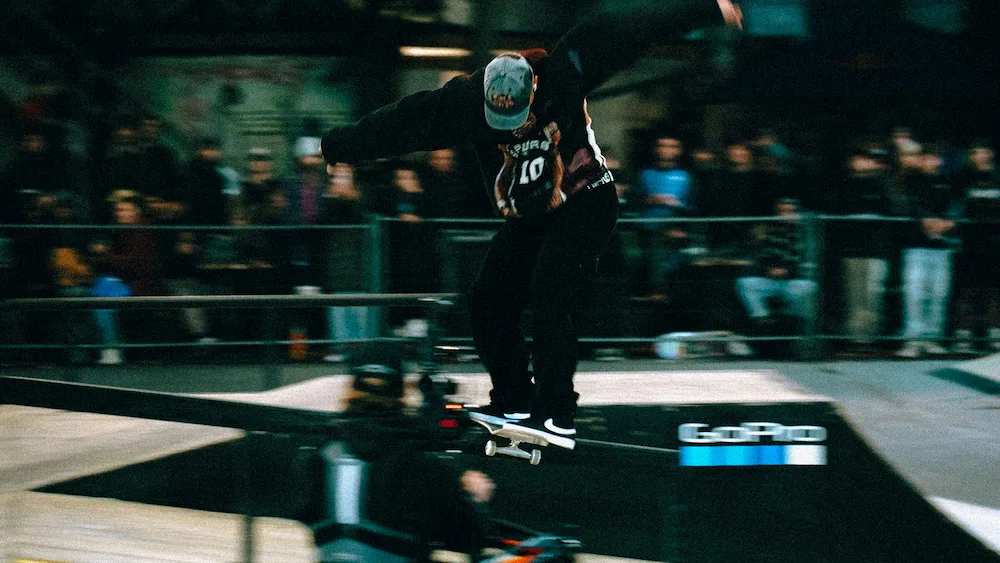
SLS has become the gold standard for skateboard contests because it has successfully balanced mainstream entertainment with a deep respect for the sport’s authenticity. This blend brings together hardcore purists and complete beginners. The almost clinical organisation provides optimal riding conditions, establishing a reliability that has attracted major sponsors and brought economic stability to the scene.
Make no mistake: skateboarding’s Olympic recognition owes a massive debt to the legitimacy built by SLS. By proving that you can structure skateboarding without stripping away its soul, SLS made history. For most of today’s pro skaters, the SLS circuit is the ultimate goal, a driver of healthy competition, and a constant source of innovation for the entire culture.
The road to LA 2028
The qualification system for the Los Angeles 2028 Games was officially announced in March 2026, relying on the World Skateboarding Ranking.
- Phase 1 (WST): From 11 June 2026 to 31 March 2028. Athletes rack up points during World Skate sanctioned events (including SLS stops).
- Phase 2 (OQS): From 1 April 2028 to 11 June 2028. The top 44 athletes per discipline and gender take part in a final series to decide the 22 Olympic qualifiers.
- Quotas: A maximum of 3 athletes per nation, with one guaranteed spot per continent and for the host country.
A closer look at SLS 2026
Competing athletes
For the 2026 Street League Skateboarding (SLS) season, a host of world-renowned skaters are battling it out in the championship. Whilst the line-up can vary slightly from one stop to the next (mainly thanks to the “Wildcard” system that allows fresh talent to qualify), here are the main athletes who competed in the first few stops of the year, notably in Sydney (in February) and Los Angeles (in April):
Men’s category:
- Ginwoo Onodera (Japan): Winner of the Sydney stop, where he made history by scoring a 9.0 or higher on every single attempt.
- Juni Kang (South Korea): The unexpected winner of the Los Angeles stop (DTLA Takeover) during his very first SLS appearance, having qualified via the Wildcard Jam.
- Nyjah Huston (USA): An iconic figure in SLS, who competed at both the Sydney and LA stops.
- Julian Agliardi (USA), Giovanni Vianna (Brazil), Angelo Caro (Peru), and Sora Shirai (Japan): All stood out during the Sydney final.
- Jagger Eaton (USA), Toa Sasaki (Japan), Alex Midler (USA), Gustavo Ribeiro (Portugal), Aurélien Giraud (France), Dashawn Jordan (USA), Chris Joslin (USA), and Antwuan Dixon (USA): All competed and placed during the Los Angeles stop.
- Yuto Horigome (Japan) is also on the official list of regular headliners for the circuit.
Women’s category:
- Rayssa Leal (Brazil): Winner of the opening stop of the 2026 season in Sydney.
- Chloe Covell (Australia): Winner of the Los Angeles stop and placing third in Sydney, making her a fierce contender this season.
- Liz Akama, Coco Yoshizawa, Momiji Nishiya, Funa Nakayama, and Yumeka Oda (all from Japan): Competed and placed in the highly contested Sydney final.
- Sky Brown (Great Britain), Daniela Terol (Spain), Paige Heyn (USA), Margielyn Didal (Philippines), and Shiloh Catori (USA): Hit the circuit during the Los Angeles competition.
2026 SLS locations
For the 2026 Street League Skateboarding (SLS) Championship Tour, the calendar features seven stops scattered across the globe:
Stop 7: São Paulo, Brazil (in December), which will serve as the grand finale of the season, hosting the prestigious Super Crown World Championship.
Stop 1: Sydney, Australia (14 and 15 February), held at the Ken Rosewall Arena.
Stop 2: Los Angeles, USA (4 April), under the “DTLA Takeover” event format at the Ace Mission Studios.
Stop 3: US East Coast (in May), with the exact location yet to be confirmed, though Washington D.C., New York, and Boston are the frontrunners.
Stop 4: Brazil (in August), in a city yet to be determined.
Stop 5: France (in October), Paris at the Roland Garros stadium (same as 2025).
Stop 6: Japan (in November), in a city yet to be determined.
Calendar SLS 2026
| Stop | Date | Lieu | Type d’événement |
| 01 | 14-15 February | Sydney, Australia | Ken Rosewall Arena (Season opener) |
| 02 | 4 April | Downtown Los Angeles, USA | Ace*Mission Studios (Takeover) |
| 03 | May | US East Coast | Takeover (Likely cities: DC, NYC, Boston) |
| 04 | August | Brazil | Championship Tour stop |
| 05 | October | France | Championship Tour stop |
| 06 | November | Japan | Championship Tour stop |
| 07 | December | Brazil (São Paulo) | Super Crown World Championship |
FAQ : everything you need to know about Street League Skateboarding
How many skaters compete in an SLS event?
The line-up varies depending on the event, but generally, between 20 and 30 of the world’s elite skaters are invited to compete at each stop.
Can you attend SLS events in person?
Yes, SLS events are ticketed and open to the public. They are also broadcast live across various digital platforms if you can’t make it on the day.
How do skaters qualify for the SLS circuit?
There are no free passes. Invites are strictly earned through solid competition results, world rankings, and regional qualifiers.
What’s the prize money for an SLS event?
The total prize purse can reach hundreds of thousands of dollars per event, which is then split according to the final rankings.
Does SLS host women’s competitions?
Absolutely! SLS has developed a dedicated women’s circuit, playing a major role in the global explosion of women’s professional skateboarding.