
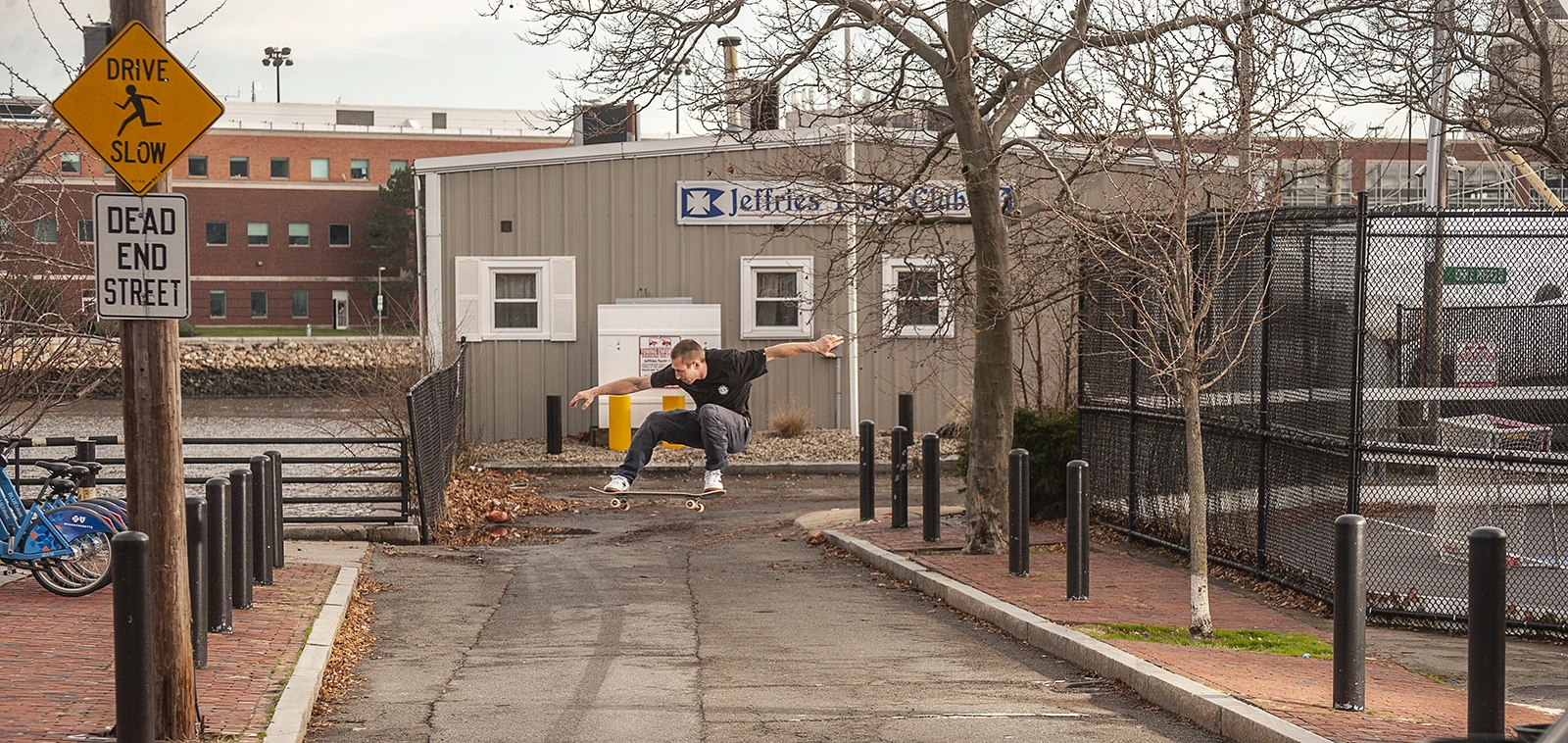
The city isn’t just a machine built for production and consumption. It’s an unfinished canvas. Down at wheel level, the skater reshapes the landscape. The photographer, meanwhile, captures its lines and flaws. Together, they unveil an ‘invisible urbanism’ – a poetic perspective on our public spaces. Right where the concrete still conceals its beauty.
Concrete in focus
With our noses buried in our screens, we navigate the city without truly seeing it. Concrete dictates its strict, functional geometry. But there is another way to read the streets. Through the lens of photographers like Fred Mortagne and beneath the decks of skaters, public space transforms into an abstract composition.
Immortalising the ride goes far beyond mere athletic performance: it’s about revealing a ‘hidden poetry’. Where the hurried passer-by sees nothing but a mass of grey, the skater – guided by the distinct hum of urethane wheels across the asphalt, discovers a canvas of textures and lines just waiting to be brought to life.
Hostile streets
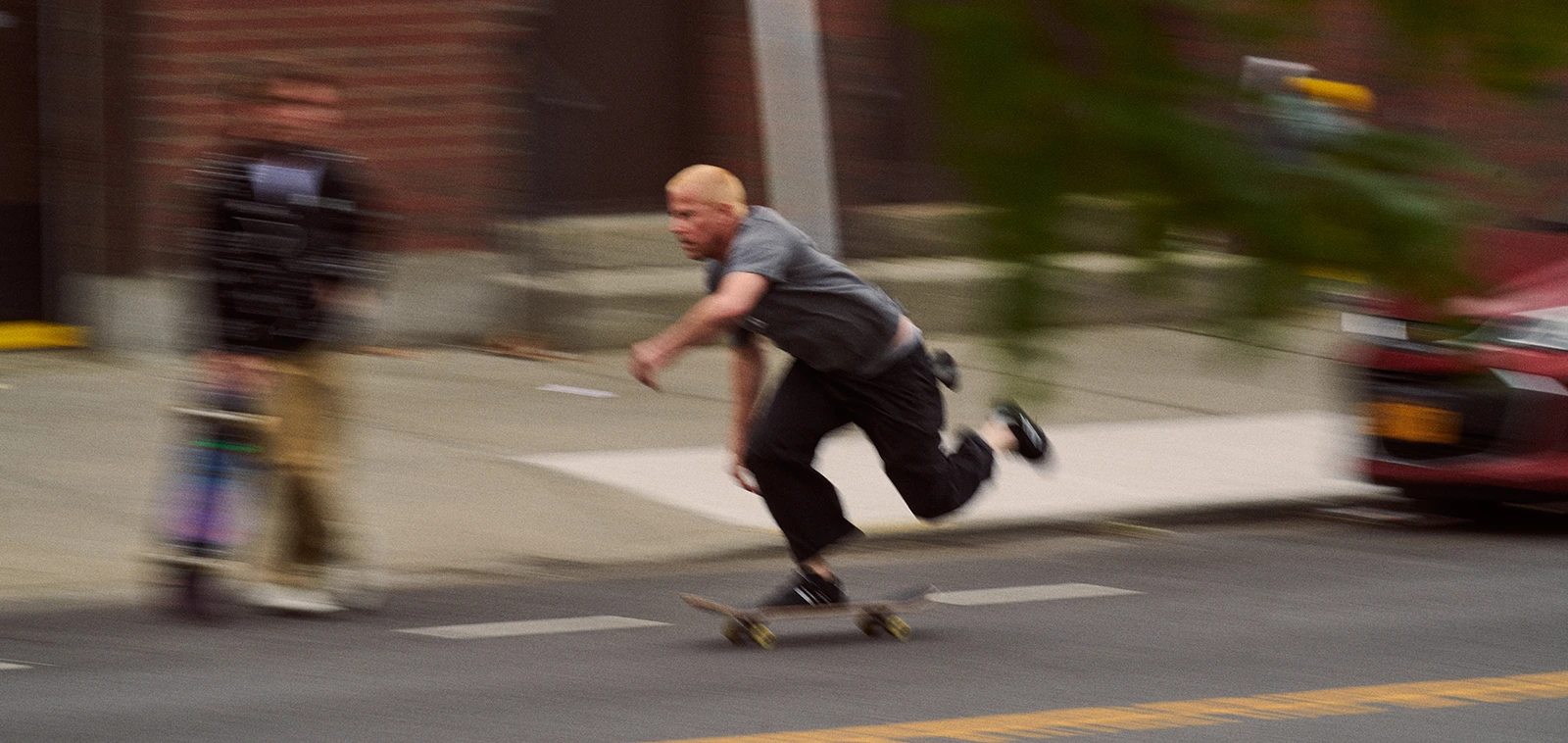
Yet, this playground is far from welcoming. Our modern cities deploy a ‘silent violence’ through increasingly blatant defensive architecture. Street furniture is weaponised to exclude. Think of the metal skate-stoppers bolted onto ledges, or the angular, ridged surfaces of London’s infamous ‘Camden bench’ – purposely designed to stop the homeless from sleeping and skaters from grinding.
Much like a black-and-white Fred Mortagne photograph, the concrete here reveals its sheer brutality. It’s a rough-grained material where harsh light clashes with the sharp shadows cast by these obstacles. Confronted with a landscape built to keep them out, skaters take the hit. They pop their boards, catch air, and sometimes slam violently into the tarmac. But rather than walking away, they choose to push through the pain of the fall, determined to subvert the very structures meant to stop them.
Subverting the concrete
This persistence elevates skateboarding to a ‘poetic interaction with public space’. An intimate bond is forged between the body and the city. The skater looks at street furniture from an entirely different angle, reimagining every element far beyond its original purpose. The cold marble, the hard granite, and the rigid stair sets of a financial district become the stage for an ultra-fluid dance. Every grind, every streak of wax left on a ledge, transforms a simple stretch of pavement into an ephemeral work of art.
At its core, this invisible urbanism carries a deeply contemporary message. By subverting the exclusionary nature of hostile design, skate culture challenges us to rethink the streets. The artist Marcel Duchamp argued that an artwork evolves through its use, and urban architecture is no exception to the rule.
The way skaters reclaim public space points towards the ideal of ‘a shared, welcoming city, accessible to all’. In fact, some architects are now baking this ‘skateability’ into their blueprints from day one to breathe new life into public squares. It’s about building a vibrant urban landscape where concrete is no longer a barrier, but the launchpad for a freedom of movement that belongs to everyone.