
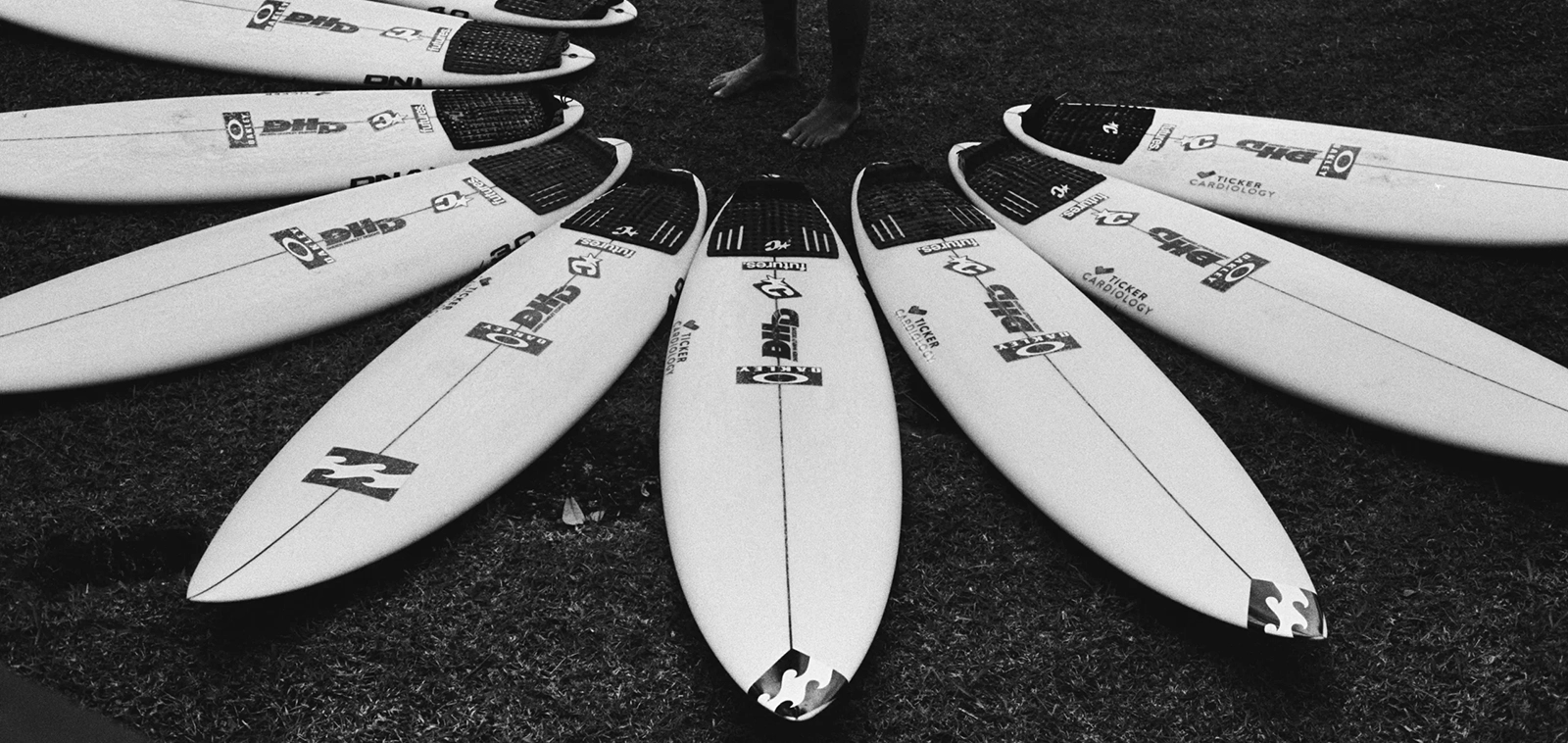
When discussing legendary surf brands, it’s impossible to overlook this Australian giant born on the golden sands of the Gold Coast at Burleigh Heads. From the first handmade boardshorts to today’s global lifestyle collections, this story recounts much more than a commercial success: it traces the evolution of a way of life that became a worldwide phenomenon centred around surf culture.
Diving into the origins of a legendary Australian brand
It all began in the effervescence of the 70s, when Australia became the laboratory for a new surf culture. Endless beaches, perfect waves, and the pioneering spirit of local surfers created fertile ground for innovation. It was in this unique context that a brand destined to revolutionise the surf industry was born.
Australia at that time was experiencing a true cultural revolution. Surfing was no longer just a sport; it was becoming a lifestyle, a philosophy. Local surfers developed their own codes, their own needs, and above all, their own technical requirements. Existing equipment no longer met the expectations of a generation of surfers who were becoming increasingly demanding.
1973 : the birth of Billabong on the Gold Coast
It was in 1973, on the mythical Australian Gold Coast at Burleigh Heads, that it all started. This region, now a surfing mecca, was then just a stretch of wild beaches frequented by a community of passionate surfers. The era was one of craftsmanship and pure creation, far from modern industrial logic.
The seventies marked a decisive turning point in surf history. Boards were evolving, techniques were being perfected, but clothing and equipment were lagging behind. Surfers tinkered, adapted, and modified their gear to meet the growing demands of their practice.
Gordon Merchant’s vision : a boardshort for surfers
Gordon Merchant is the founder and architect of the Billabong product philosophy. An experienced surfer, he understood better than anyone the physical constraints of surfing: friction, repeated impact, temperature variations, and hours spent in the water. His goal was not to create a trendy product, but a reliable tool for surfers.
His vision rested on three simple principles:
- Absolute priority given to functionality and durability.
- Systematic testing in real surf conditions.
- Continuous improvement based on surfer feedback.
This “by riders, for riders” approach would become Billabong’s DNA and remain at the heart of the brand long after its international growth.
Innovation at the heart of success : the triple stitch
The key innovation that propelled Billabong ahead of other brands of the time was the triple stitch, a manufacturing technique that reinforced the seams of boardshorts in high-stress areas. This triple stitching allowed the shorts to withstand violent wipeouts and repeated sessions without ripping.

To this mechanical resistance, other essential technical choices were added:
- Quick-drying materials to avoid heaviness and chafing.
- A cut designed for freedom of movement, particularly around the thighs and hips.
- An overall design centred on performance rather than beach fashion.
These innovations allowed surfers to focus on their surfing without fearing for the durability of their gear. Quickly, the triple stitch became a strong point of differentiation and a symbol of the Billabong promise: products made to last.
Conquering the world, wave after wave
Billabong went international in the 1980s, driven by the progression of competitive surfing and the rise of the surf lifestyle. Surfers travelled more, professional circuits became structured, and surf imagery spread massively through magazines and videos.
The brand adopted a simple and effective strategy:
- Maintain high technical standards for products.
- Establish a presence in key surf culture zones (Hawaii, California, Europe, Japan).
- Rely on the best athletes to give the brand credibility.
Gradually, Billabong expanded its ranges: t-shirts, sweatshirts, accessories, then complete collections for men, women, and children. The brand moved out of the line-up and into the street, while retaining an image deeply linked to the ocean and board sports.
What does the slogan “Only a Surfer Knows the Feeling” mean?
The slogan “Only a Surfer Knows the Feeling” means that certain sensations—the glide, the perfect take-off, the successful tube ride—can only be truly understood by those who surf. Billabong thus summarises in one sentence the emotional intensity unique to surfing.
Adopted in the early 1980s, this slogan quickly became a pillar of the brand’s identity. It doesn’t just sell a product: it expresses belonging to a community, a global tribe united by shared experiences in the ocean. By positioning the surfer’s feeling at the heart of its communication, Billabong distinguishes itself from purely visual or technical approaches. This slogan helped install the brand as a standard-bearer of modern surf culture.
Which surfers made the Billabong legend?
Billabong established itself as a reference brand largely thanks to its sponsorship strategy. The brand chose to surround itself with athletes who embodied technical excellence as much as a certain surf spirit—committed, creative, and sometimes rebellious.
Among the surfers who have marked Billabong’s history, we notably find:
- Andy Irons, three-time world champion, whose powerful and committed style left a deep mark on competitive surfing.
- Joel Parkinson, world champion and a figurehead of modern Australian surfing.
- Taj Burrow, an iconic free-surfer and competitor, known for his explosive surfing.
These three surfers, notably reunited in the film Trilogy, helped associate Billabong’s image with very high-level surfing while reinforcing its aura among young surfers worldwide. Beyond competition results, these partnerships allow for direct product feedback. Athletes become privileged testers, continuously fuelling the brand’s technical innovation.
Opening up to the women’s market
Billabong opened up to the women’s market by developing a dedicated line of products for female surfers early on, from bikinis to wetsuits, through to complete lifestyle collections. Today, the Billabong Women’s line represents an essential part of the brand’s identity, with products designed specifically for women in terms of fit, style, and performance.
From the early years, Billabong was not limited to men’s boardshorts: alongside the shorts made on Gordon Merchant’s kitchen table, crocheted bikinis were also born for local surfers. This dual offer, technical and feminine, laid the foundations for a universe in which women have their full place, both in the water and on the beach.
Over the decades, the brand structured this female universe through complete collections: swimwear, beachwear, neoprene wetsuits, jackets, and everyday clothing. The latest ranges illustrate this evolution: wetsuits and springsuits with bold designs, created to offer warmth, freedom of movement, and style to surfers of all levels.

This opening to the women’s market is not just a simple declination of products for women. Billabong relies on ambassadors and dedicated female teams, highlights professional surfers, and develops storytelling where women’s surfing is fully valued. The result: a brand that speaks as much to surfers as to female surfers (but not only), and which makes surfing a truly mixed universe, from the line-up to lifestyle collections.
Billabong today
Today, Billabong is much more than a boardshort manufacturer: it is a global surfwear and lifestyle brand, integrated into the portfolio of the international group Authentic Brands Group, following the acquisition of Boardriders, the parent company that grouped several major board sports brands.
The brand continues to offer technical products dedicated to surfing and water sports, while developing complete lifestyle collections: everyday clothing, outerwear, accessories, and special collaborations. This evolution allows it to reach a wider audience, including consumers who do not surf but identify with the values of surf culture. Despite industry changes and shareholder shifts, Billabong retains a clear identity base: connection to the ocean, product quality, and celebration of a lifestyle centred on riding waves and freedom.
How is Billabong committed to ocean protection?
Billabong increasingly aligns its development with environmental responsibility, in tune with the expectations of a new generation of surfers aware of ecological issues. The brand highlights initiatives linked to ocean protection and reducing its environmental impact.
Among these approaches, we notably find:
- Participation in beach cleaning programmes and marine pollution awareness.
- The progressive integration of recycled materials into certain product ranges (like the Recycler series).
- Collaboration with organisations and associations committed to defending coastal ecosystems.
The goal is to reconcile product performance, loyalty to surf DNA, and a positive contribution to preserving the environment that made the brand possible: the ocean.
FAQ – Everything you need to know about Billabong
When was the Billabong brand created?
Billabong was founded in 1973 on the Gold Coast, Australia, by Gordon and Rena Merchant. The first boardshorts were handmade in Burleigh Heads and sold locally to surfers.
What technical innovation made Billabong’s initial success?
The key innovation was the triple stitch, a reinforced stitching technique that makes boardshorts much more resistant to the mechanical stresses of surfing. This durability quickly distinguished Billabong from other brands of the time.
What does the slogan “Only a Surfer Knows the Feeling” mean?
The slogan “Only a Surfer Knows the Feeling” means that certain sensations linked to surfing—the glide, the barrel, the contact with the ocean—can only be fully understood by those who surf. It expresses belonging to a community and summarises the brand’s philosophy.
Does Billabong only produce surf items?
No. While Billabong remains strongly specialised in technical products for surfing and water sports, the brand today offers complete lifestyle collections: everyday clothing, accessories, and outerwear for a much wider audience than just surfers.
What are Billabong’s current environmental commitments?
Billabong develops initiatives in favour of ocean protection and reducing its environmental impact: participation in beach cleaning programmes, partnerships with environmental associations, and increasing integration of recycled materials into certain product lines, all while maintaining its quality standards.