
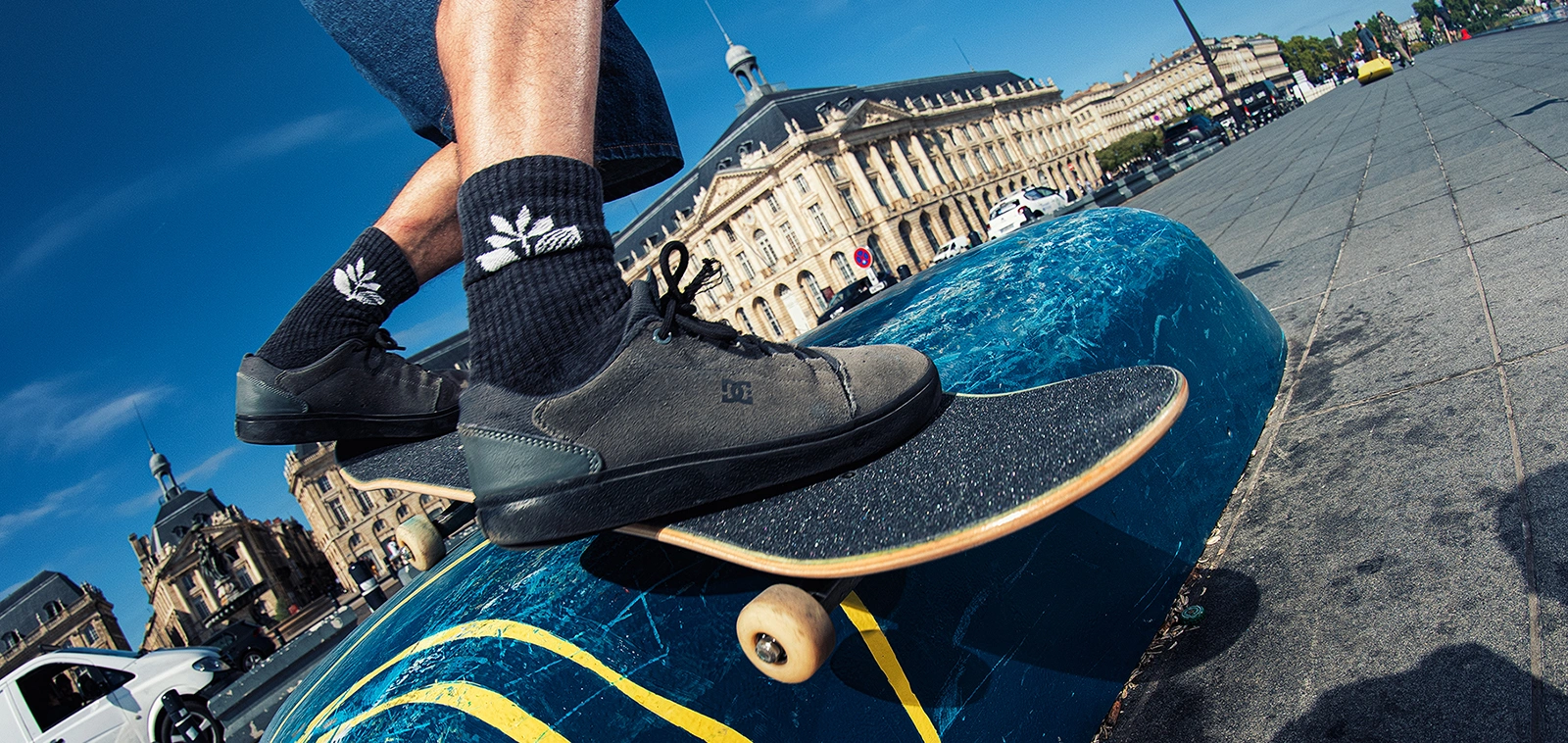
Your wheels directly dictate how your ride feels. Too soft, and you’ll lose speed on smooth surfaces, though you’ll gain comfort by absorbing rough ground and reducing noise (handy on city cobblestones). Too hard, and every crack in the pavement becomes an obstacle, but you’ll fly on the flat and slide with ease.
Wheel hardness, measured by the durometer, influences your performance just as much as your comfort. Whether you’re a street skater, a ramp enthusiast, or a relaxed cruiser, understanding this spec will help you boost your ride based on your style.
Understanding the durometer
The durometer measures a material’s resistance to indentation. For skateboard wheels, this rating determines their capacity to absorb shock, their grip, and their rolling speed. The higher the number, the harder the wheel.
The A Scale: the standard for most skaters
The A Scale is the industry standard in the skateboarding world. It generally ranges from 78A to 101A. This grading makes it easy to identify a wheel’s behaviour:
- 78A to 87A: Very soft wheels, perfect for cruising, filmers, and rough tarmac.
- 88A to 95A: Soft to medium wheels, ideal for commuting and learning your first tricks on varied terrain.
- 96A to 99A: Medium to hard wheels, the versatile all-rounders for street or park skating.
- 100A to 101A: Hard wheels, optimised for smooth concrete, skateparks, and technical powerslides.
This scale offers enough precision for most disciplines. The majority of manufacturers use it, making comparisons between brands straightforward.
The B Scale: for absolute precision
Some manufacturers (like Bones) use the B Scale for very hard wheels, typically those that would technically exceed 101A. This scale shifts the measurement down by about 20 points to allow for more accurate grading at the top end.
- Conversion: A wheel rated 83B is roughly equivalent to a 103A.
The B Scale allows for finer graduation in extreme hardness. It is particularly useful for tech street skaters looking for maximum sensitivity and speed on smooth surfaces. However, its rarity can sometimes cause confusion when buying your first set.
Which Hardness for Your Skating Style?
Every style of skateboarding has specific requirements that guide your choice of hardness. Your favourite terrain and your progression goals will determine the ideal wheel.
For Street: prioritise slide and response (95A+)
Street skateboarding requires wheels that slide easily over urban obstacles (ledges, rails, and curbs). These maneuvers need a reduced contact surface to make slides and grinds fluid. Wheels from 99A to 101A offer that sought-after slide. Their hardness minimises grip on obstacles, allowing you to slide through tricks with control. The high rolling speed on smooth asphalt compensates for the lack of comfort on rougher surfaces. This hardness also improves landing precision; less deformation means direct energy transfer, which is essential for technical combos.
For Skatepark and Transition: aim for speed and grip (97A – 101A)
Skateparks combine smooth surfaces with steep transitions. This diversity requires versatile wheels that maintain speed while offering enough “bite” in the curves. The 97A to 101A range meets these demands perfectly. On smooth ramp surfaces, these wheels maintain excellent rolling speed. In tight carves, they provide enough grip to hold your line without slowing you down excessively. Maintaining speed is key in transition—wheels that are too soft would absorb your energy and reduce the height of your airs.
For the Bowl: a compromise between grip and speed (95A – 98A)
Bowls require a delicate balance. The walls are often weathered, and the varied curves demand adaptable wheels. The 95A to 98A range offers the optimal compromise. Soft enough to absorb imperfections and maintain contact in tight carves, these wheels remain firm enough for straight-line speed. This allows you to pump effectively through transitions while keeping the control needed for aerial tricks.
For Cruising and Filming: comfort above all (78A – 90A)
Cruising prioritises a smooth ride over raw performance. Covering long distances or filming in varied urban environments requires wheels that absorb vibrations and noise while avoiding “hang-ups” (stopping dead on a pebble). Wheels from 78A to 90A transform the commuting experience. Their softness filters out ground imperfections, reducing leg fatigue. This hardness also provides excellent grip on damp or dusty surfaces. For filmers, these wheels allow for silent, fluid movement. Filming on a board requires a “4×4” feel where the slightest obstacle won’t cause a wipeout and risk damaging expensive camera gear.
The Impact of Terrain and Build
Beyond your style, two physical factors directly influence how wheels behave: your body weight and the ground texture.
How does your weight influence your choice?
Your weight changes the pressure exerted on the wheels, affecting their deformation. A heavier skater compresses the wheel more, simulating the effect of a lower durometer.
- Under 60 kg: You can opt for slightly softer wheels than the standard recommendation to enjoy extra comfort without losing performance.
- Over 80 kg: Prioritise higher durometers. Your natural weight will compensate for the extra firmness, maintaining optimal rolling characteristics.
Adapting to smooth vs. rough ground
The texture of the ground determines the interaction between the wheel and the surface.
- Smooth surfaces (indoor parks, fresh warehouse slabs): Harder wheels maximise speed and response. There is no need for shock absorption, so you can exploit the benefits of firmness.
- Rough surfaces (old asphalt, gritty concrete): Softer wheels are indispensable. They absorb the irregularities that would rattle and slow down a hard wheel, while also saving your joints during long sessions.
Double Duro: wheels with two hardnesses
In recent years, brands have developed “Double Duro” wheels—featuring two different hardnesses in one wheel. If you’re a street skater who needs to roll over crusty ground but still wants to do bluntslides on curbs, this is the perfect compromise!
FAQ – Your questions about skateboard wheel hardness
Can I mix wheels of different hardnesses on the same board?
Technically possible, but strongly advised against! To use a car analogy: you wouldn’t mix tractor tyres with those of a hatchback. It will make the board feel unpredictable.
How often should I change my wheels?
Lifespan depends on intensity and surface. On average, expect 6 to 12 months for regular use.
Do soft wheels wear out faster?
Yes. Their “gummier” composition makes them more susceptible to abrasion, especially on rough surfaces or during heavy sliding.
Do I need special wheels to start skateboarding?
Medium wheels (95A-98A) offer a great compromise for beginners, providing a mix of comfort and performance without being too specialised.