
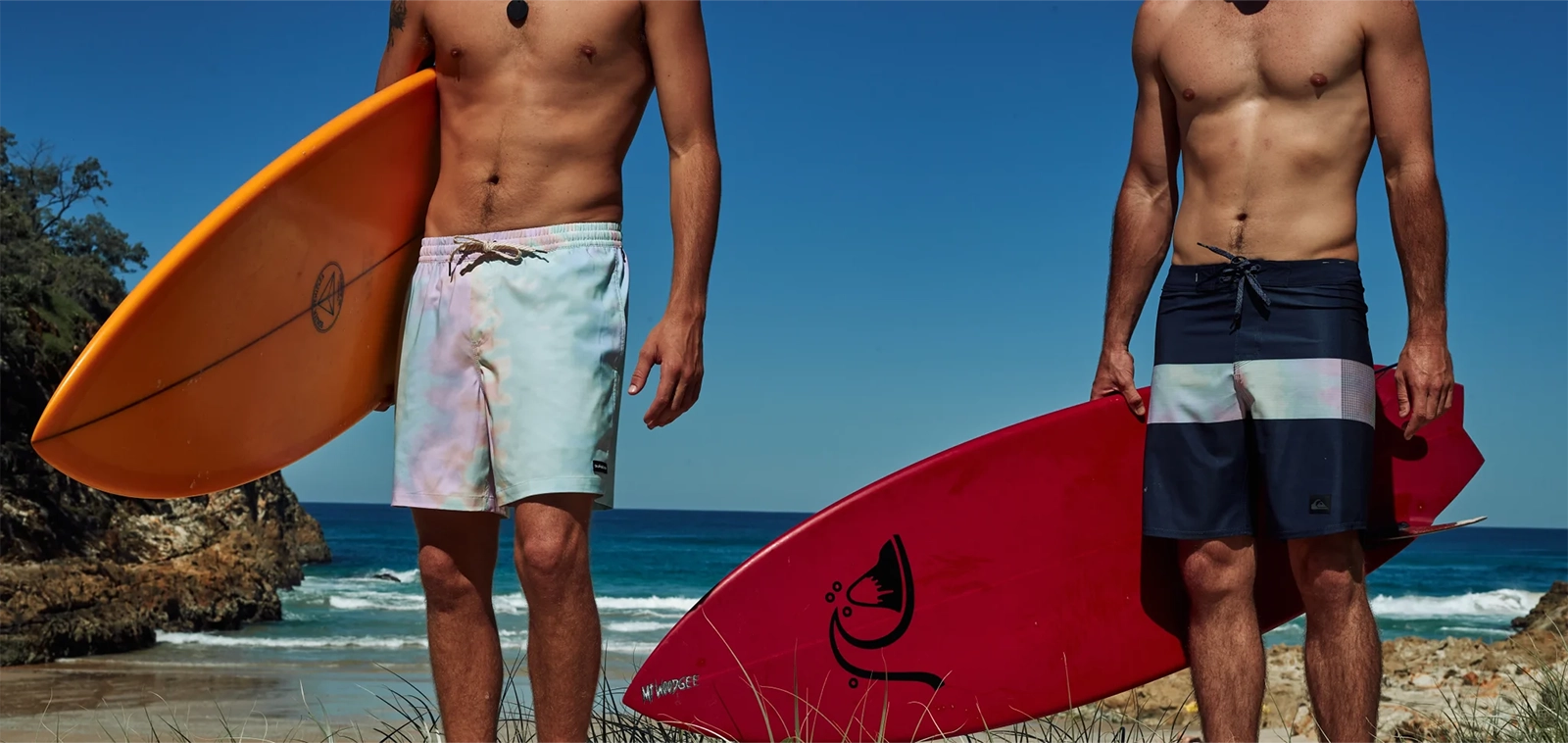
Surfing demands far more than just knowledge of the waves. Your body is your primary tool on the board, and like any good athlete, you must maintain it to perform. Targeted physical preparation will transform your session, from the very first paddle out to the most technical manoeuvres. Discover how to develop the power, endurance, and agility needed to push your aquatic limits.
Why strength training is your best ally on the board
Surfing engages your entire body in a unique way. Unlike land-based sports, you are operating in an unstable environment where every movement must be precise and powerful. Specific muscle strengthening gives you the keys to mastering this capricious element.
Building endurance to paddle longer
Paddling accounts for about 90% of your time in the water. Your shoulders, back, and core work constantly to propel you towards the waves. Muscular endurance allows you to maintain a steady pace even during long sessions, reach further peaks, and recover faster between sets.
Without physical preparation, fatigue sets in quickly. Your movements become less fluid, your timing degrades, and you miss the best waves of the set. Muscular endurance guarantees consistent performance from the start to the end of your session.
Boosting explosiveness for a successful take-off
The take-off requires perfect coordination between power and speed. In a matter of seconds, you must transition from a prone position to standing, all while balancing on a moving board. This explosive transition requires functional strength developed specifically for this technical movement.
The muscles in your arms, trunk, and legs must work in synergy to project you upwards with fluidity. The more developed your explosiveness, the faster and more precise your take-off will be, allowing you to surf steeper and more technical waves.
Improving balance to master manoeuvres
Dynamic balance is the foundation of all your movements on the board. Unlike static balance, this involves maintaining stability in constant motion, on an unstable and changing surface. Your proprioceptive system and stabilising muscles work together to keep you in an optimal position.
Developed balance allows you to anticipate the wave’s movements, adjust your posture instantly, and link manoeuvres with fluidity. It is the difference between fighting the wave and dancing with it.
Preventing injuries and surfing safely
Surfing exposes your body to significant stresses: impacts with the board, wipe-outs, and sudden twists. A prepared body resists common injuries like shoulder tendonitis, lower back pain, or sprains much better.
Muscle strengthening creates a protective shield around your joints. Toned and balanced muscles distribute stress better and compensate for postural imbalances linked to repetitive paddling.
Surfer anatomy: muscle zones to target
Upper body: The engine of your paddle
Your shoulders are the true engines of your propulsion. The anterior and posterior deltoids, combined with the latissimus dorsi (lats), generate the power needed to slice through the water effectively. The rhomboids and traps stabilise your shoulder blades to optimise the paddling motion.
Your arms complete this muscle chain. Triceps work during the push through the water, while biceps control the return of the arm. Forearms and wrists maintain an effective catch on the water throughout the movement. Don’t forget your neck and cervical muscles, constantly engaged to keep your head above water and scan the horizon. These less visible but essential muscles deserve special attention to avoid tension.
The core: The centre of your balance
Your trunk is the connection point between your upper and lower body. Deep abdominals, particularly the transverse abdominis, keep your spine aligned during paddling and absorb shocks during manoeuvres.
Obliques play a crucial role in rotations and weight transfers. They allow you to pivot on the wave, initiate your turns, and maintain lateral balance on the board. The lumbar muscles complete this belt of strength. They counterbalance the work of the abdominals and protect your back from repeated hyperextensions during paddling.
Lower body: The source of your power
Your legs are your natural shock absorbers and your source of power for manoeuvres. Quadriceps and hamstrings work together to flex and extend your knees, absorbing the wave’s irregularities.
Glutes, particularly the gluteus maximus, generate the power needed for bottom turns and cut-backs. They also stabilise your pelvis and participate in maintaining your posture on the board. Your calves and tibialis anterior control ankle flexion, which is crucial for maintaining contact with the board. The small stabilising muscles in your feet constantly adapt to the wave’s movements.
Functional Exercise Programme for Surfing
Functional exercises reproduce specific surfing movements. They develop coordination, strength, and endurance in the planes of motion you use in the water.
Exercises for powerful and enduring paddling
- Pull-ups: Hang from a bar, arms extended. Pull your body up until your chin clears the bar. Lower slowly. This develops the pulling strength needed for powerful paddling.
- Rows: Lying under a bar or using resistance bands, pull your elbows back by squeezing your shoulder blades. This strengthens the rhomboids and lats, key paddling muscles.
- Dry-land swimming: Lying on your stomach, alternate arm movements as if paddling, maintaining the position for 30 to 60 seconds. Add wrist weights to increase difficulty.
- Swimming stroke with bands: Fix a resistance band in front of you and replicate the paddling motion. The progressive resistance simulates water drag.
Exercises for an explosive and fast take-off
- Surf Burpees: Start in a plank, jump your feet towards your hands, stand up and snap into a surf stance. Return to plank. This replicates the exact movement of the take-off.
- Pop-ups: Lying prone, place hands flat at shoulder level and push explosively to land in a squat, then stand. Work on the fluidity and speed of the movement.
- Jump Squats: Squat down, then jump explosively upwards extending your arms. Land softly bending your knees. Develops leg power for the take-off.
- Mountain Climbers: In a plank position, alternate rapidly bringing one knee to the chest then the other. Maintains core strength while developing leg explosiveness.
Exercises for rock-solid core and stability
- Plank Variations: Classic plank, side plank, or with arm/leg lifts. Hold for 30 to 90 seconds depending on your level. Develops core stability in all planes.
- Dead Bug: Lying on your back, knees bent at 90°, alternate extending opposite arm and leg while keeping your back flat on the floor. Strengthens deep abdominals.
- Bird Dog: On hands and knees, simultaneously extend right arm and left leg, then switch. Works on coordination and spinal stability.
- Pallof Press: With a band or cable, resist rotation while holding your arms out in front of you. Excellent for obliques and resisting lateral forces.
Exercises for committed and fluid turns
- Wood Chops: With a medicine ball or weight, perform rotational movements from high to low and right to left. Develops rotational core power.
- Lunges with Rotation: Forward lunge with trunk rotation towards the front leg. Combines leg strength and rotational mobility.
- Single-leg Deadlift: Standing on one leg, hinge forward extending the other leg behind. Develops balance and independent leg strength.
- Lateral Bounds: Jump laterally from one leg to the other, maintaining balance upon landing. Develops lateral power and proprioception.
Planning your routine: How to integrate these exercises
Plan your surfer routine by aiming for 3 strength sessions per week, alternating between power work (heavy loads, low reps) and endurance (moderate loads, high reps), depending on your surf schedule.
Before each workout, perform 5 to 10 minutes of light cardio, targeted joint mobility, then a few dynamic movements inspired by surfing to prime the body.
After the effort, prioritise active recovery, static stretching of key areas (pecs, hips, calves), perhaps some yoga or Pilates, and ensure you respect about 48 hours of rest per muscle group, with 7 to 9 hours of sleep to optimise progression and injury prevention.
FAQ – Your questions about surf fitness
How long before I see results?
The first benefits appear after 2-3 weeks of regular training. Your paddling endurance improves quickly, while strength and explosiveness require 6 to 8 weeks of diligent work.
Can I train on surf days?
Prioritise light activation or mobility sessions on surf days. Intense workouts should be scheduled on days without water sessions to optimise recovery.
Should I train differently based on my surf level?
Beginners should first develop basic endurance and stability. Advanced surfers can integrate more explosive exercises and complex movements specific to their manoeuvres.
How should I adapt my training in the off-season?
Use periods without surf to build your general physical condition. Increase training volume and work on your weak points to come back stronger next season.