
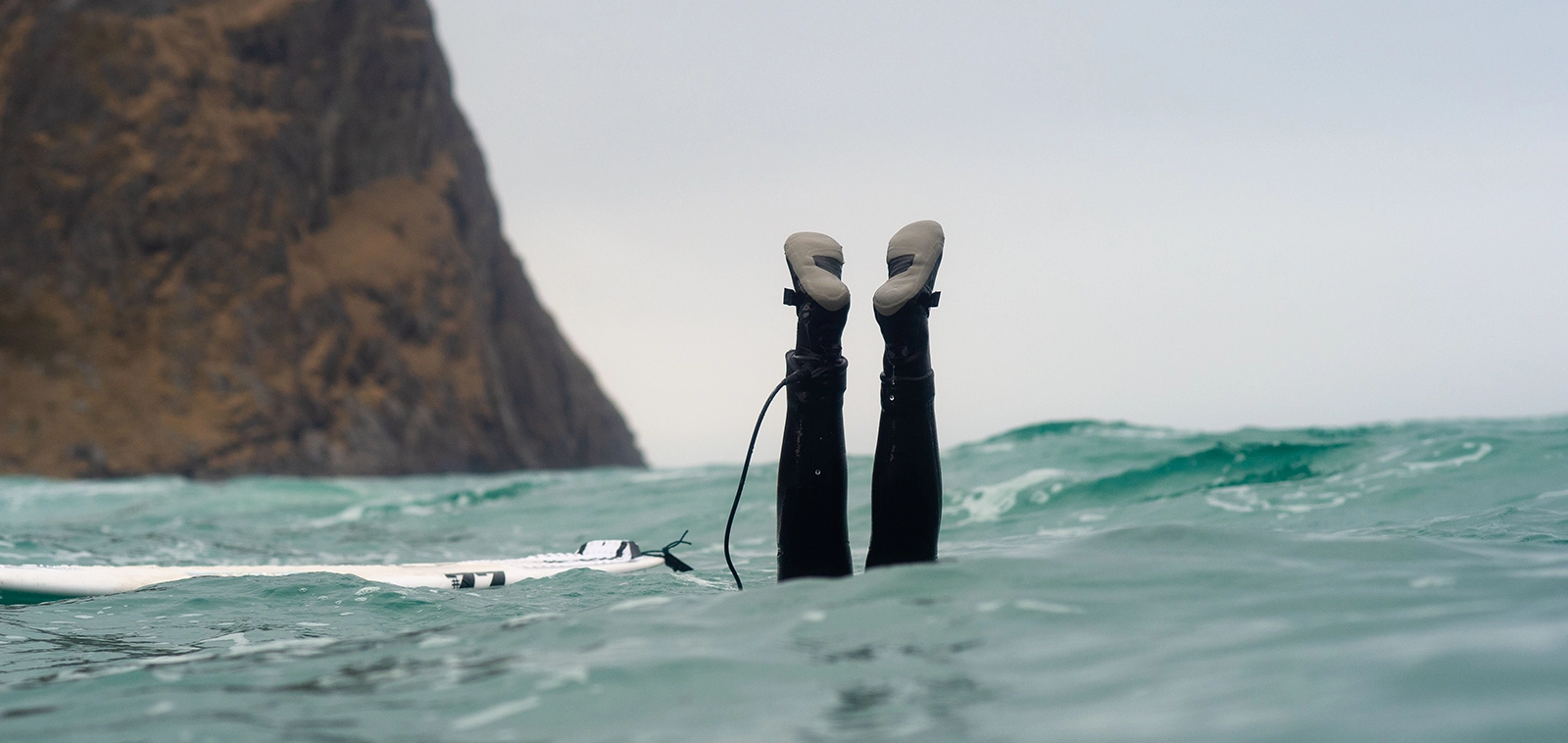
Surfing in winter isn’t just about battling the cold: it’s primarily a question of kit. Neoprene hoods, gloves, and boots play a decisive role in keeping you warm, comfortable, and performing well when temperatures plummet. Chosen correctly, these accessories extend your sessions without dulling your sensations.
Why surfing neoprene accessories are essential
Neoprene accessories are vital for cold water surfing because they complete your wetsuit’s insulation exactly where heat loss is most significant. Even with a high-performance steamer, your extremities remain the areas most exposed to the elements.
Improving grip and performance
The right equipment directly improves the quality of your stance and the precision of your movements. Wetsuit boots reinforce grip on the board, while gloves preserve the dexterity needed for paddling. The result: more control, less fatigue, and increased safety when conditions get heavy.
Limiting heat loss and extending sessions
Your feet, hands, and head account for the majority of thermal loss. Protecting them helps maintain a stable core body temperature, allowing you to stay in the water longer—even when conditions hover around 8°C. Neoprene works by trapping a thin layer of water between the skin and the material, which your body heats up: a precise fit is therefore crucial.
Protection from cold, wind, and rub
Neoprene surf accessories reduce chafing from repetitive movements, particularly around the neck when duck diving. Out of the water, they also limit the impact of wind chill and prevent that brutal cooling effect during lulls between sets.
Gloves, boots, hoods: which surfing accessory for which condition?
Each accessory meets specific needs depending on the conditions you face. The art lies in combining the right elements without weighing yourself down unnecessarily.
Wetsuit boots: keeping contact with your board
Boots are often the first investment for surfers facing fresh waters. They radically transform the comfort of autumn and winter sessions by keeping feet warm while optimising board contact.
The sole is the critical element: it must offer sufficient grip without compromising board feel. Split-toe models allow for maximum toe flexibility, which is essential for balance and fine adjustments. Height also influences warmth: high-cut boots offer better protection against cold water flushing.
For temperate waters between 12°C and 16°C, thin 3mm boots are ample. Below 12°C, prioritise 5mm models, which retain heat better without limiting sensation too much.
Gloves: better dexterity and protection
Neoprene gloves protect your hands from biting cold while preserving your ability to grab your rails during technical manoeuvres. The challenge lies in striking a balance between thermal protection and dexterity.
5-finger gloves offer better precision for grabbing rails or adjusting your position. Mittens provide superior insulation but limit fine motor skills. For most European winter conditions, 3mm gloves are the ideal compromise.
The webbing between fingers deserves attention: too thick, and it hinders movement; too thin, and it tears quickly. Look for models with reinforced friction zones and non-slip palms (liquid seal).
The hood: for prolonged winter sessions
A neoprene hood protects your head and neck—areas particularly sensitive to the cold. It prevents the dreaded “ice cream headache” caused by thermal shock and maintains your overall body temperature.
The fit of the hood around the face determines its effectiveness: too tight, and it restricts circulation; too loose, and cold water flushes in. Models with a reduced facial opening are better suited to extreme conditions, while more open versions preserve your peripheral vision. Some hoods feature a “bib” that tucks under your wetsuit, eliminating water entry at the neck.
The neoprene top: lightweight protection for summer
A neoprene top or vest proves invaluable during shoulder seasons or for early morning summer sessions. This lightweight layer prevents rash caused by the wetsuit or board while providing moderate thermal insulation.
Available in short or long sleeves, it adapts to changing conditions. Technical models incorporate reinforced stretch zones at the shoulders and underarms so as not to hinder your paddling.
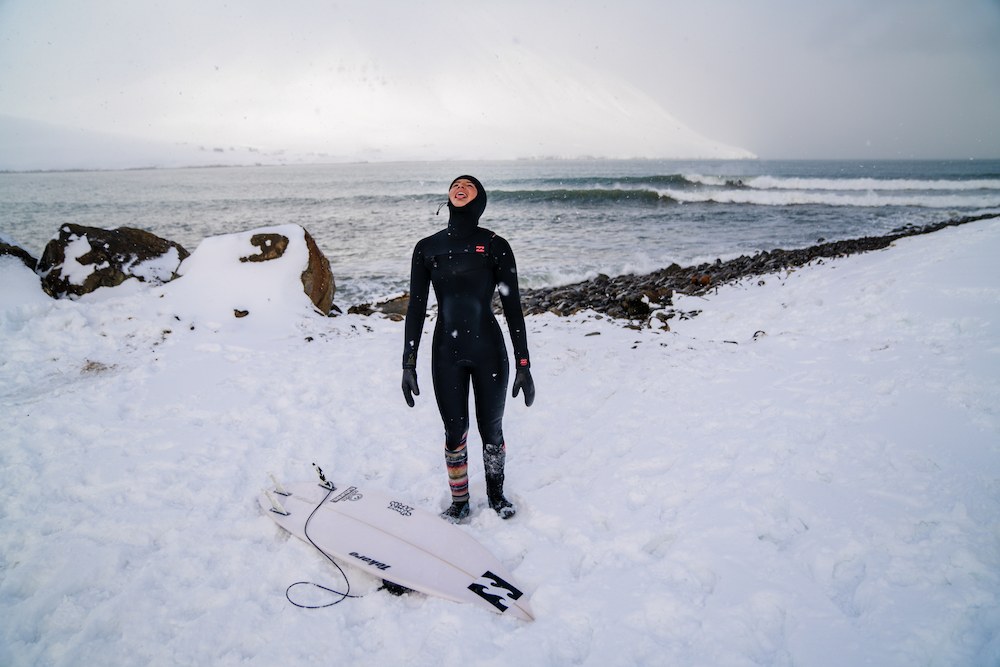
How to choose the right thickness for every surf accessory
The thickness of the neoprene directly determines thermal insulation but also influences flexibility and board feel. Finding the optimal balance requires taking several factors into account.
Understanding the millimetres: a temperature guide
| Water | Gloves | Hood | Boots |
|---|---|---|---|
| 12–16°C | 3 mm Dexterity & light protection | 2–3 mm Standard thermal protection | 3 mm Grip & thermal comfort |
| 8–12°C | 5 mm Reinforced insulation for cold water | 3–5 mm Drastically reduces heat loss | 5 mm Extended winter protection |
| < 10°C | 5 mm High-density for intense cold | 5–7 mm Extreme winter conditions | 5 mm + Maximum extremity warmth |
Tailoring your choice to your cold tolerance
Your physical build greatly influences your insulation needs. Slimmer surfers lose body heat faster and benefit from thicker accessories. Conversely, a stockier build naturally retains heat better.
Session duration is also a key factor. For two-hour stints in cold water, prioritise maximum protection. Short, one-hour “splash and dash” sessions allow for a compromise on thickness in favour of flexibility.
Wind exposure also changes the thermal equation. Windy spots demand superior protection, particularly for the head and neck, where wind chill significantly accelerates heat loss.
The fit: key to efficient and comfortable gear
Even a top-tier neoprene accessory is useless if it fits poorly. Trying gear on allows you to check comfort, insulation, and range of motion, going beyond simple size charts.
Finding the perfect size: what to watch out for
Neoprene accessories must be snug without being restrictive. Folds or baggy areas let cold water flush in, while excessive tightness cuts off circulation and reduces comfort.
- Hoods: The face opening must preserve your peripheral vision while preventing water entry at the neck and temples.
- Boots: Toes should touch the end without being crushed, with the heel held firmly in place to prevent rubbing and lifting.
- Gloves: Fingers should flex freely, without tension in the webbing or excess material at the fingertips.
Checking seam quality and finish
Seams directly dictate durability and insulation. Look for regular stitching that is Glued and Blind Stitched (GBS) to limit water ingress. Liquid taping is a bonus. Also, check the flexibility of the neoprene at flexion zones (ankles, fingers, neck) and the quality of finishes like seals or velcro straps, which are often put to the test in the marine environment.
FAQ – Your questions about neoprene surf accessories
Should I rinse neoprene accessories after every surf?
A simple rinse with fresh water is sufficient after every use to remove salt. A full wash with special wetsuit shampoo is only necessary if persistent odours develop or after a trip with consecutive sessions.
How do I know if my surf accessories are worn out?
Replace your gear as soon as you see tears, splitting seams, or a notable loss of elasticity. Neoprene that has become stiff, brittle, or cracked has lost its insulating properties.
Can I layer neoprene accessories for surfing?
Layering thin accessories (like wearing thin socks under boots) can be effective in extreme conditions, but be careful not to restrict your blood flow or mobility. This technique is rare and requires trial and error.
Do neoprene accessories also protect from the sun?
Yes, neoprene offers excellent UV protection, especially black models which effectively absorb rays. This is a significant advantage during prolonged summer sessions or trips to the tropics.