
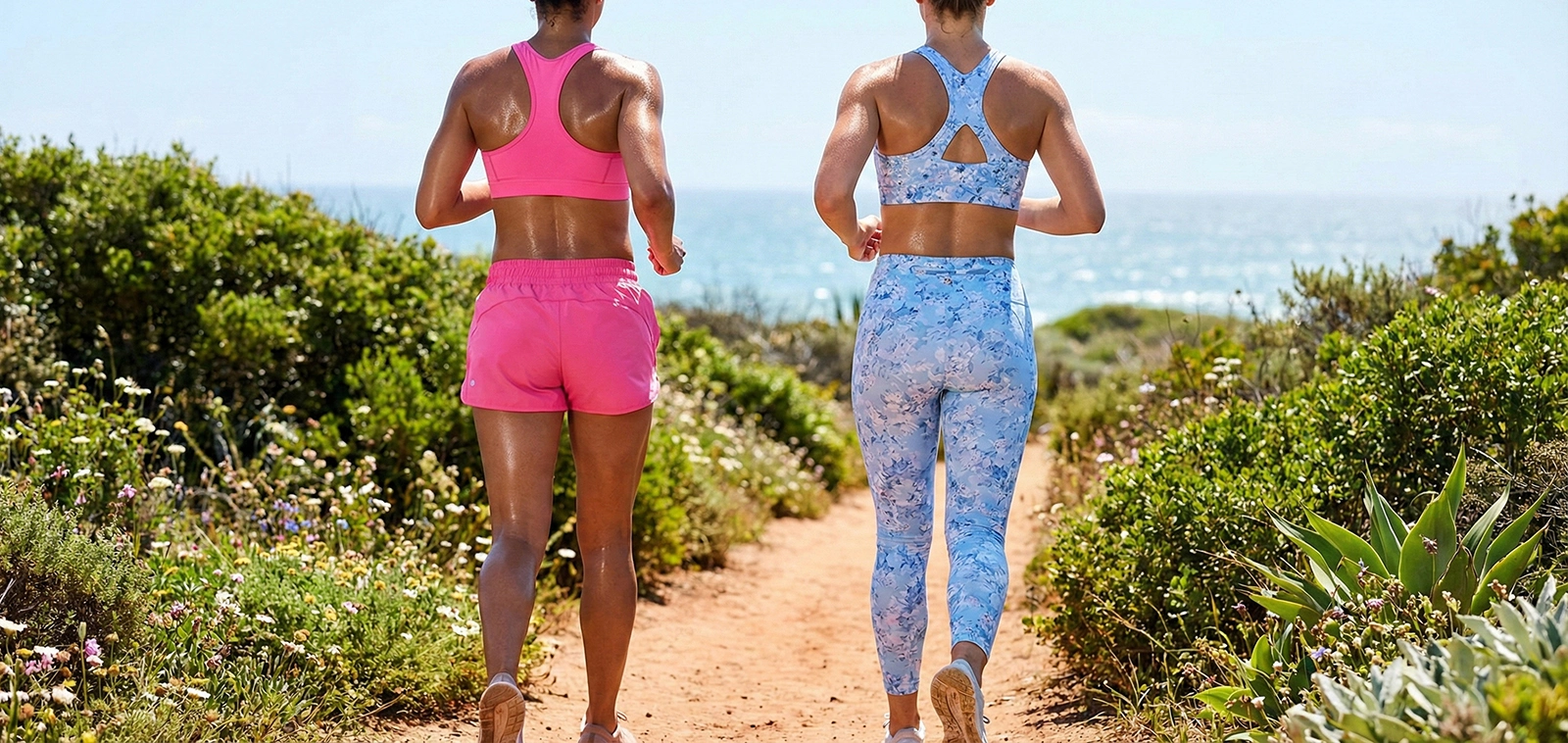
Finding the ideal sports bra can completely transform your workout experience. Far from being a mere accessory, it is the cornerstone of your training kit—the piece that supports you through every movement. Balancing support, comfort, and style, discover how to make the choice that will unlock your sporting potential.
Why the right sports bra is essential for your sport
Exercising without adequate support can quickly become uncomfortable, or even counter-productive. The breast is made up of soft tissue supported only by skin and thin ligaments known as Cooper’s ligaments. During exercise, the bust can endure multi-directional movement and bounce of several centimetres.
The benefits of a good sports bra
A quality sports bra acts as a protective shield. It limits excessive breast movement, reducing strain on the ligaments and pectoral muscles. This support helps preserve the natural firmness of the bust over the long term. Beyond protection, comfort is paramount. A well-fitted bra eliminates unpleasant chafing, prevents irritation, and allows you to focus fully on your performance. Technical fabrics wick away moisture to keep you feeling fresh, even during intense effort.
The risks of poor support
Inadequate support can lead to several issues. Back, shoulder, and breast pain are among the most common consequences. This muscle tension can alter your posture and limit your range of motion. The discomfort caused by an ill-fitting bra can also affect your motivation and performance. Excessive bounce disturbs balance and coordination, particularly in sports requiring precision or rapid changes of direction.
Understanding support levels
Light support (Low Impact)
Light support is perfectly suited to gentle activities and controlled movements. These bras prioritise comfort and freedom of movement. They are ideal for yoga, where deep stretches and poses require a wide range of motion, or for Pilates, which focuses on precision and core control. These models are also an excellent choice for power walking, stretching, or mat-based conditioning. Their soft construction naturally contours to the body without creating excessive compression.
Moderate support (Medium Impact)
Moderate support represents the ideal compromise between stability and comfort. These bras are perfect for medium-impact activities like cycling, where movement remains relatively stable, or dance, which combines fluidity with dynamic shifts. For light fitness, step classes, or aqua aerobics, this level of support offers the necessary stability without compromising breathability. These models are also well-suited to upper-body strength training sessions.
High support (High Impact)
High-impact activities demand maximum support. Running, with its repetitive impact on the ground, generates significant multi-directional movement. Team sports, involving sudden changes of direction and jumping, also require optimal stabilisation. Boxing, martial arts, or HIIT (High Intensity Interval Training) classes require this level of support to maintain comfort and performance throughout the effort. These bras integrate advanced compression technologies and structural support.
Matching your sports bra to your body shape
Every body shape has its own specificities and deserves particular attention when choosing a bra. Understanding your silhouette’s needs allows you to optimise both comfort and fit.
Smaller bust
For smaller busts, the main objective is to create a nice shape while offering support adapted to the activity. Moulded or lightly padded cups add volume and create a harmonious silhouette. Thin straps and racerback designs are perfectly suited to this morphology, offering an elegant style without overwhelming the frame. Soft, stretchy materials naturally hug the body without creating unsightly gaps.
Medium bust
A medium bust benefits from a wide choice of styles and constructions. This is the most versatile morphology regarding sports bra selection. Moulded cups, compression styles, or even padded options can all work depending on personal preference and the sport involved. You can explore different strap styles and back designs based on your aesthetic taste. The key remains prioritising the level of support suited to the intensity of your workout.
Fuller bust
Fuller busts require specific attention regarding support and weight distribution. Encapsulation bras (with individual cups) often offer better support than simple compression models. The search for optimal support must take precedence over aesthetic considerations. Wide, adjustable straps are essential to distribute weight evenly and prevent strain on the shoulders. Cross-back designs or models with hook-and-eye fastenings generally offer better stability than pull-on styles for this body type.
Criteria for making the right choice
Fabrics and breathability
Modern technical fabrics have revolutionised sports comfort. Synthetic fibres like polyester or nylon effectively wick away sweat and dry quickly. Blends containing elastane provide the necessary stretch for athletic movement. Look for fabrics with antibacterial treatments to limit odours and prioritise breathable mesh in high-sweat zones. Mesh panels promote airflow and maintain a feeling of freshness.
Cup types
Each cup type answers specific needs. Padded cups create volume and offer a rounded shape, particularly appreciated by smaller busts. Moulded cups naturally contour the breast shape without adding bulk. Compression models hold the bust close to the body, making them ideal for high-impact activities. They reduce bounce but can be less comfortable for fuller busts during prolonged sessions.
Straps and back design
The back design directly influences support and comfort. Racerbacks offer great freedom of movement for the arms and are particularly suitable for swimming or exercises that intensely engage the upper body. Cross-back straps distribute weight better and prevent straps from slipping off the shoulders, which is a bonus for dynamic activities. Classic straight straps remain versatile and suit most activities.
Fastening systems
Pull-on styles prioritise simplicity and avoid friction points on the spine, making them great for floor work. They suit small to medium busts well. Hook-and-eye fastenings allow for a more precise fit (tightening the band as it stretches over time) and make it easier to get the bra on and off, especially for fuller busts. Front zips offer practicality and adjustability, allowing you to modify the opening for comfort. They also make changing after a sweaty workout much easier.
How to measure yourself correctly
Measure your bust
Take a soft tape measure and stand naturally. Wrap the tape around your chest at the fullest part of your bust. The tape should be level—neither too tight nor too loose. Take this measurement while wearing a non-padded bra (or no bra) to get an accurate figure. Note this measurement in centimetres (or inches); it will serve as your primary reference.
Measure your underband (rib cage)
This second measurement is taken directly under the bust, where the band of your bra usually sits. Keep the tape measure level and snug enough that it doesn’t slide down. This measurement determines your band size and directly influences the quality of support. A well-fitted band provides the majority of the bra’s support.
Understanding size charts
Size charts vary by manufacturer but generally follow similar logic. Your underband measurement determines your band size (e.g., 32, 34, 36…), while the difference between your two measurements indicates your cup size (A, B, C…). Always consult the specific chart for each brand and don’t hesitate to compare it with your usual size. If you fall between two sizes, prioritise the larger size for comfort, especially if you have a fuller bust.
Tips for trying on your sports bra
The bounce test
Once the bra is on, perform a few dynamic movements. Jump on the spot to check stability. Raise your arms above your head and rotate them to test freedom of movement. Lean forward and check that the bra stays in place without gaping at the neckline. These simple movements replicate the basic demands of most sports.
Adjusting the straps and band
The band should be snug without being restrictive. You should be able to slide two fingers under it without difficulty. The straps should neither dig into your shoulders nor constantly slip off. Adjust the strap tension gradually. They should contribute to stability but shouldn’t bear the majority of the weight, that is the job of the underband.
Don’t hesitate to build a varied wardrobe to suit your activities and moods. A neutral, versatile bra for daily training, a technical model for intense sessions, and perhaps a bold design to assert your unique style.
FAQ – Your questions about choosing sports bras
Can I wear the same sports bra for all my sports?
It is best to adapt the level of support to the intensity of your activity. A light-support bra will be fine for yoga but insufficient for running.
How should I wash my sports bra to make it last?
Stick to a cold wash on a delicate cycle, and avoid the tumble dryer as heat can destroy the elasticity of the fibres. Always air dry.
What should I do if my bra feels too tight on the ribs?
This usually indicates a band size that is too small. Try the next band size up, potentially going down a cup size to compensate if necessary.
Is it normal for my bra to leave red marks after a workout?
Slight, temporary marks are normal, but if they persist or are painful, your bra is likely too tight or ill-suited to your body shape.
How many sports bras should I have in my wardrobe?
Ideally, aim for at least 3-4 bras to allow for rotation and optimal drying time between uses. Adapt this number based on your training frequency.