
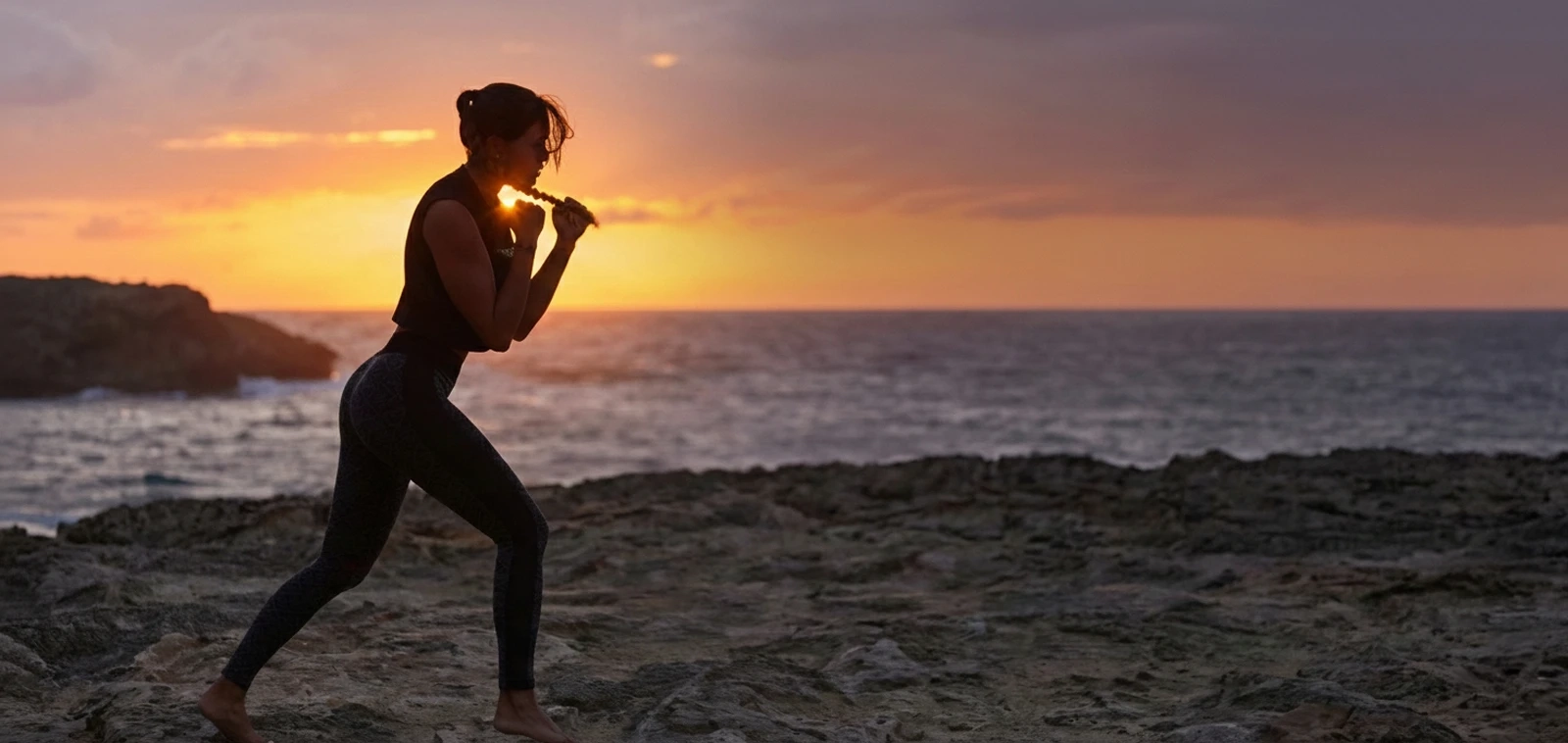
Every sport has its own set of requirements. The sports bra that supports you perfectly during a yoga flow might not offer the stability needed for a high intensity training session. From fabric breathability to the precision of the cut, discover how to build a performance led wardrobe tailored to your favourite activities.
Why your workout wardrobe matters
Comfort drives performance
Ill fitting gear quickly hampers the quality of your workout. Chafing, irritation, or poorly adjusted clothing can disrupt your focus and restrict your movement.
Conversely, technical activewear provides tangible benefits:
- Optimal freedom of movement.
- Efficient moisture wicking.
- Better body temperature regulation.
Modern synthetic fibres offer the stretch and comfort needed for everything from slow paced flows to explosive training.
Safety and support to prevent injury
Support is a key factor in injury prevention. Inadequate equipment can lead to pain, tension, or skin irritation.
The main points to watch are:
- A supportive sports bra to prevent back pain.
- Stable fabrics to limit friction.
- Compression levels that match the intensity of your activity.
Every discipline, from Pilates to weightlifting, demands specific levels of support.
Style as a motivational tool
Feeling good in your kit directly influences your motivation. When you feel confident in your gear, you are more likely to commit to your session.
Colours and styles also play a role: some energise your effort, while others promote calm and focus. Investing in quality gear is a genuine lever for long term athletic engagement.
The ideal outfit for yoga and pilates
Fabrics: softness, stretch, and breathability
Cotton-elastane blends offer natural softness while retaining their shape. Bamboo fibres have natural antibacterial properties and help regulate temperature. Elastane, usually present at 10% to 20%, ensures total freedom of movement.
For your Pilates or yoga kit, prioritising seamless or flat seams is essential to avoid chafing during prolonged poses. Tag-free finishes also contribute to overall comfort.
Tops: light-support bras and fluid tees
A light or medium-support sports bra is more than enough for these practices. Look for racerback designs for optimal shoulder mobility. Wider straps distribute weight better and prevent digging in.
For your top layer, opt for fluid cuts that move with you. Oversized tees or vests with wide armholes create a relaxed silhouette perfect for these sessions. Avoid rigid materials that might limit your range of motion during deep stretches.
Bottoms: leggings, shorts, or flared trousers
High-waisted leggings support the core without compressing it and stay in place during bends. A 7/8 length highlights the ankles while protecting the knees during floor work.
Cycling shorts are ideal for hot studio sessions, while wide-leg trousers add an aesthetic and spiritual dimension to your practice. Ensure the waistband does not roll down or create uncomfortable bunching.
Technical socks
Toe socks with non-slip grips improve balance and grounding. They are a great alternative to shoes, allowing for a direct connection with your mat.
Your kit for HIIT and strength training
The intensity of these disciplines requires robust equipment capable of absorbing sweat and resisting repetitive, explosive movements.
High-impact bras and compression
Invest in technical high-impact sports bras. Models with underwiring and moulded cups offer maximum support. Compression should feel firm but never hinder your breathing. Cross-back straps provide extra stability during lateral movements.
Test the support by jumping on the spot: you should feel no bounce. Models with back hooks make it much easier to take off after a sweaty session.
Fabric durability and moisture wicking
Polyester and its derivatives are excellent at wicking away moisture. Open-mesh fabrics promote airflow, and strategically placed mesh zones under the arms and across the back accelerate drying.
Graduated compression stimulates blood flow and limits muscle vibration, reducing fatigue and speeding up recovery between sets.
Resilient shorts, leggings, or joggers
Compression leggings support the muscles and limit oscillation during jumps. A high waistband prevents the fabric from slipping during intense drills. Look for side pockets to store your keys or phone.
For long sessions, shorts with integrated liners prevent chafing. A mid-thigh length offers a good balance between freedom of movement and coverage. Reinforced seams are a must to withstand repetitive wear and tear.
Guide des Tenues
Sélectionnez votre discipline pour optimiser votre équipement.
Configuration Yoga
| Équipement | Cahier des charges |
|---|---|
| Brassière | Maintien léger, coutures plates, matière “seconde peau”. |
| Bas | Legging taille haute Squat-proof ou pantalon fluide. |
| Accessoires | Tapis antidérapant (4mm min), briques de support. |
Configuration HIIT
| Équipement | Cahier des charges |
|---|---|
| Brassière | Maintien extrême (High-Support), bretelles larges. |
| Haut | Matière technique hydrophobe, évacuation rapide. |
| Chaussures | Amorti dynamique et stabilité latérale renforcée. |
Configuration Musculation
| Équipement | Cahier des charges |
|---|---|
| Haut | Coupe ajustée pour surveiller l’engagement musculaire. |
| Bas | Short de compression ou legging résistant aux frottements. |
| Chaussures | Semelle plate (Zero-Drop) pour un ancrage maximal. |
The criteria for successful activewear
Prioritise breathability and moisture management
Technical fibres wick moisture to the surface through a capillary structure. This wicking technology keeps the skin dry and limits the bacteria responsible for odours. Antibacterial treatments help keep your kit fresh between washes.
The importance of flat seams and fit
Flat or bonded seams eliminate friction points, creating a second skin effect. The fit should be snug without being restrictive, allowing for optimal circulation.
Test your clothing in every position: arms up, squatting, and lunging. No area should pull or cause discomfort. Freedom of movement is the absolute priority.
Durability and easy care
Quality activewear can withstand frequent washing without losing its technical properties. High-performance fibres retain their elasticity and wicking capabilities over time. Look for pieces that are machine washable at 30°C and quick drying for maximum convenience.
Building a smart and stylish sports wardrobe
Focus on versatile, timeless pieces
Invest in quality basics that last through the seasons. A well-made pair of black leggings works for almost any activity and pairs easily with anything. Neutral-toned tops are equally simple to mix and match.
Multipurpose pieces maximise your options: a sports bra that can be worn alone in summer or under a vest in winter.
Harmonising colours and brands
Create a coherent palette using a maximum of three colours. This makes matching your kit effortless and gives your look a clear identity. Neutral tones provide a solid base, which can be lifted by pops of high-energy colour.
Mixing brands can enrich your wardrobe as long as there is an overall harmony. Quality and fit should always take precedence over logos.
Adapting to your environment (Indoor vs. Outdoor)
Air-conditioned studio sessions require less temperature regulation than outdoor training. For outdoor workouts, look for UV protection and lighter colours that reflect heat.
Layering is key: a lightweight sweatshirt for the warm-up can be easily removed once your body temperature rises. This flexibility is especially valuable during the changing seasons.
FAQ – Your questions about fitness and training gear
Should I wash my workout clothes after every session?
Ideally, yes – especially base layers and sports bras. Technical fibres lose their moisture-wicking effectiveness if sweat is allowed to build up. A cold wash is the best way to preserve the fabric’s performance properties and elasticity.
Can I wear the same sports bra for all activities?
Your level of support should match the intensity of your workout. For example, a low-impact yoga bra won’t provide the necessary stability for running or high-intensity interval training (HIIT).
How can I tell if a sports bra offers enough support?
Give it a “bounce test” by doing a few jumping jacks or running on the spot. If you notice excessive movement or feel any discomfort, the support level isn’t sufficient for high-impact activity.
Is compression gear necessary for everyone?
While compression wear is designed to boost performance and aid muscle recovery, it isn’t a requirement for every gym-goer. If you’re just starting out, stick to standard fitted activewear and reassess your needs as your training intensity increases.