
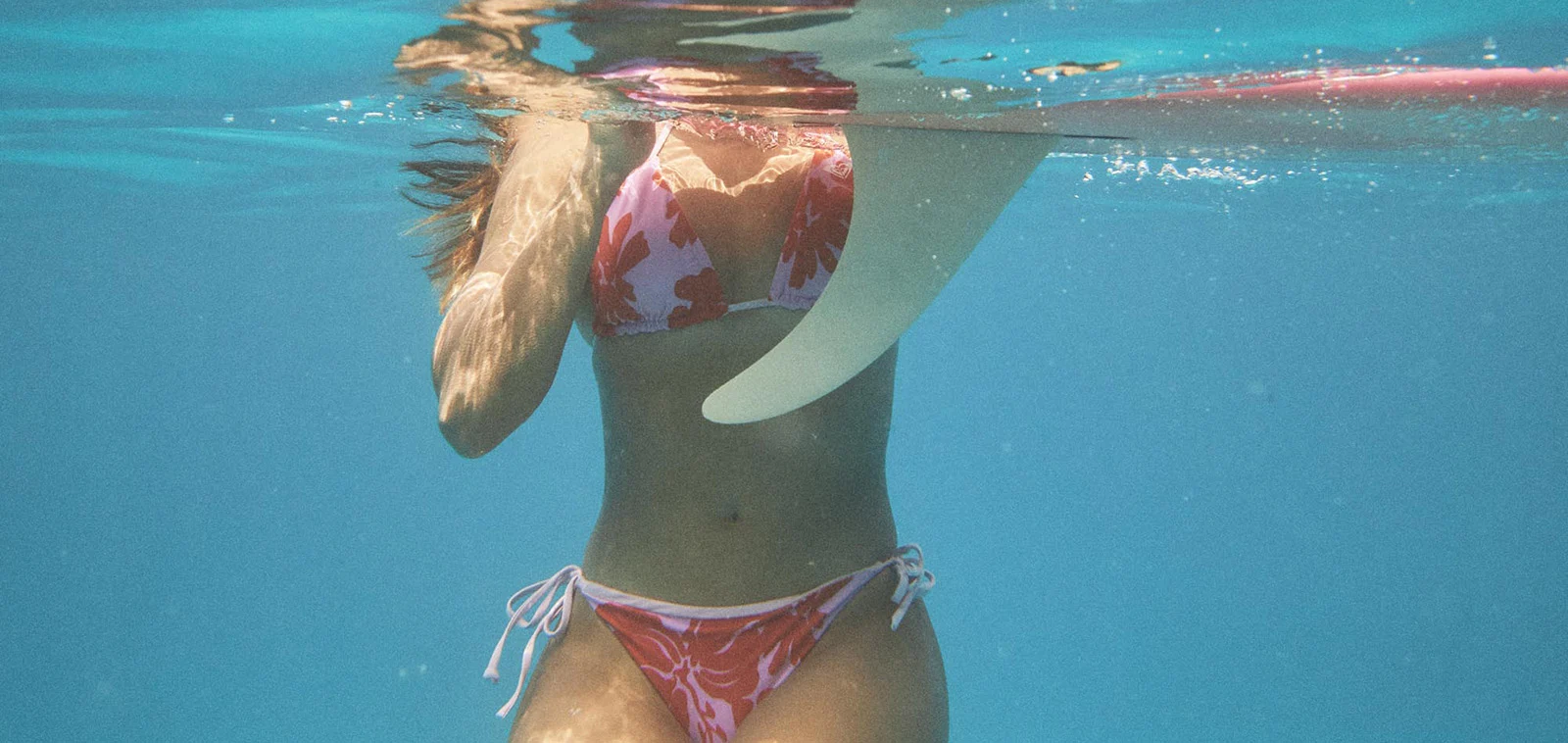
Finding the perfect bikini for surfing is an art form. Between the churning waves, duck dives, pop-ups, and relentless sets, your swimwear needs to stay put, support you, and mirror your every move. We aren’t just talking about a simple bikini for sunbathing here; this is a true performance partner, designed as much for technical prowess as for style.
So, how do you find the swimsuit that will have your back through every session? Here is everything you need to know to choose a bikini that makes you feel free, confident, and ready to take on the elements.
Essential criteria for a sports bikini
The difference between a standard bikini and a surf-ready model lies in its technical engineering. Every detail counts when it comes to transforming a casual beach day into a successful session in the lineup. The goal? To allow you to focus entirely on your waves without a second thought about your outfit.
Support first: which top should you choose?
Support is the number one priority when picking your bikini top. Forget classic triangles—they simply won’t hold up against the impact of a wave. Instead, look for models with an integrated structure that contours perfectly to your bust. Tops with moulded cups or soft underwiring offer optimal support without compromising your freedom of movement.
Technical details make all the difference: look for designs with a wide underbust band to distribute tension across a larger area. This design prevents uncomfortable pressure points and ensures a perfect fit, even in the choppiest conditions.
Straps you can rely on
Your straps largely determine how reliable your bikini will be. Tie-up styles are rarely suitable for surfing as they risk coming undone under the repeated movement and the drag of the water. Opt for wide, adjustable straps—ideally with a cross-back design.
Multiple closure systems provide extra security. A racerback or crossed straps create a balanced distribution of tension. Some models feature safety clips or reinforced fastening systems to eliminate any risk of an unpleasant surprise in the surf.
Bikini bottoms that stay put
Your bikini bottoms deserve just as much attention as the top. Coverage is key: the more surface area covered, the better the stay-put power. High-waisted or mid-rise models offer superior hold compared to Brazilian cuts, which tend to shift.
Wide sides help stabilise the fit and limit stretching. Avoid bottoms held together by thin side-ties. Instead, choose models with integrated elastic bands or wider side panels that ensure better grip against the skin.
The right fabric for comfort and durability
The composition of your bikini directly influences its performance. Polyamide-elastane blends dominate the market thanks to their elasticity and resistance to chlorine and salt. An elastane content of between 15% and 20% guarantees the necessary flexibility without losing shape over time.
Some brands develop specific technical fabrics using recycled fibres or UV-protective treatments. These innovations provide extra sun protection while supporting an eco-friendly approach. Friction resistance and quick-drying capabilities are also essential assets.
Ideal bikini cuts for water sports
Every body shape and ability level requires specific cuts. The key is to prioritise functionality without sacrificing your personal style. Certain designs stand out for their suitability for boardsports.
The sports crop top
The sports-style bikini top (or bralette) is one of the best choices for effective support in the water. Inspired by traditional sportswear, it adopts those high-performance features for the surf. The construction offers good compression to support the bust without being restrictive, even during high-intensity movement.
This type of top is particularly suited to larger busts that require maximum support. Full racerback models leave the shoulders completely free, making paddling much easier. The lack of back closures also eliminates friction points against the board.
The surf-ready triangle top
The triangle isn’t completely off-limits for surfing, provided you choose a model redesigned for action. “Active” versions feature pre-moulded cups that hold their shape even when wet. The fastening system is more robust, often featuring multiple straps to distribute tension.
Look for triangle tops with a wide back strap or an integrated band under the bust. This hybrid design keeps the classic triangle aesthetic while providing the necessary stability. Multiple adjustment points allow for a precise fit tailored to your shape.
High-waisted or lattice-side bottoms
The high-waist is making a well-deserved comeback in the surfing world. Its generous coverage and integrated waistband create a particularly stable fit. Sitting at the natural waistline prevents the bottoms from sliding down—a recurring issue with low-cut styles.
Models with lattice or cross-over detailing on the sides add a stylish touch while reinforcing the fit. these interwoven sections create multiple anchor points. Just ensure the straps are wide enough so they don’t dig into the skin under tension.
Our final tips before you hit the water
Theory is no substitute for practice. A few simple tests will help you validate your choice before you buy. These checks take only a minute but can save you a lot of hassle once you’re out back.
Move around in the fitting room!
Standing still isn’t enough to judge a surf bikini. Use the changing room to mimic the movements of your sport: raise your arms, lean forward, and twist your torso. The suit should follow these movements without shifting or causing discomfort.
Also, test the strength of the fastenings by gently pulling on the various straps and adjustments. A flimsy system will reveal itself quickly. Don’t hesitate to squat or simulate a paddling position to check that nothing rides up or slides down inappropriately.
Match your choice to your intensity
Your level and surfing style directly influence which bikini you should choose. A beginner who spends most of her time lying on the board won’t have the same requirements as an advanced surfer performing radical manoeuvres. The intensity of your sessions dictates the level of support needed.
For long sessions or heavy conditions, always prioritise security and comfort over style. A bikini that stays perfectly in place during an hour of mellow surfing might reach its limits during a three-hour session in powerful waves. Match your gear to your ambitions and your progress.
FAQ – Your surf bikini questions
Should I buy a smaller size to compensate for the water?
No, stick to your usual size. Modern technical fabrics retain their properties even when wet. A size too small will lead to painful digging in and restriction.
How should I care for my surf bikini to make it last?
Rinse your swimwear in fresh water immediately after every session, hand wash with a mild detergent, and dry in the shade. Avoid hot water and vigorous wringing, which damage the elasticity.
Can I wear the same bikini for the pool and the ocean?
Yes, but be mindful of chlorine, which wears down fibres prematurely. If possible, rotate between several suits to extend their lifespan.
Are underwired bikinis compatible with surfing?
Rigid underwiring should be avoided as it can cause injury during wipeouts. Opt for soft plastic wiring or structures integrated directly into the fabric.