
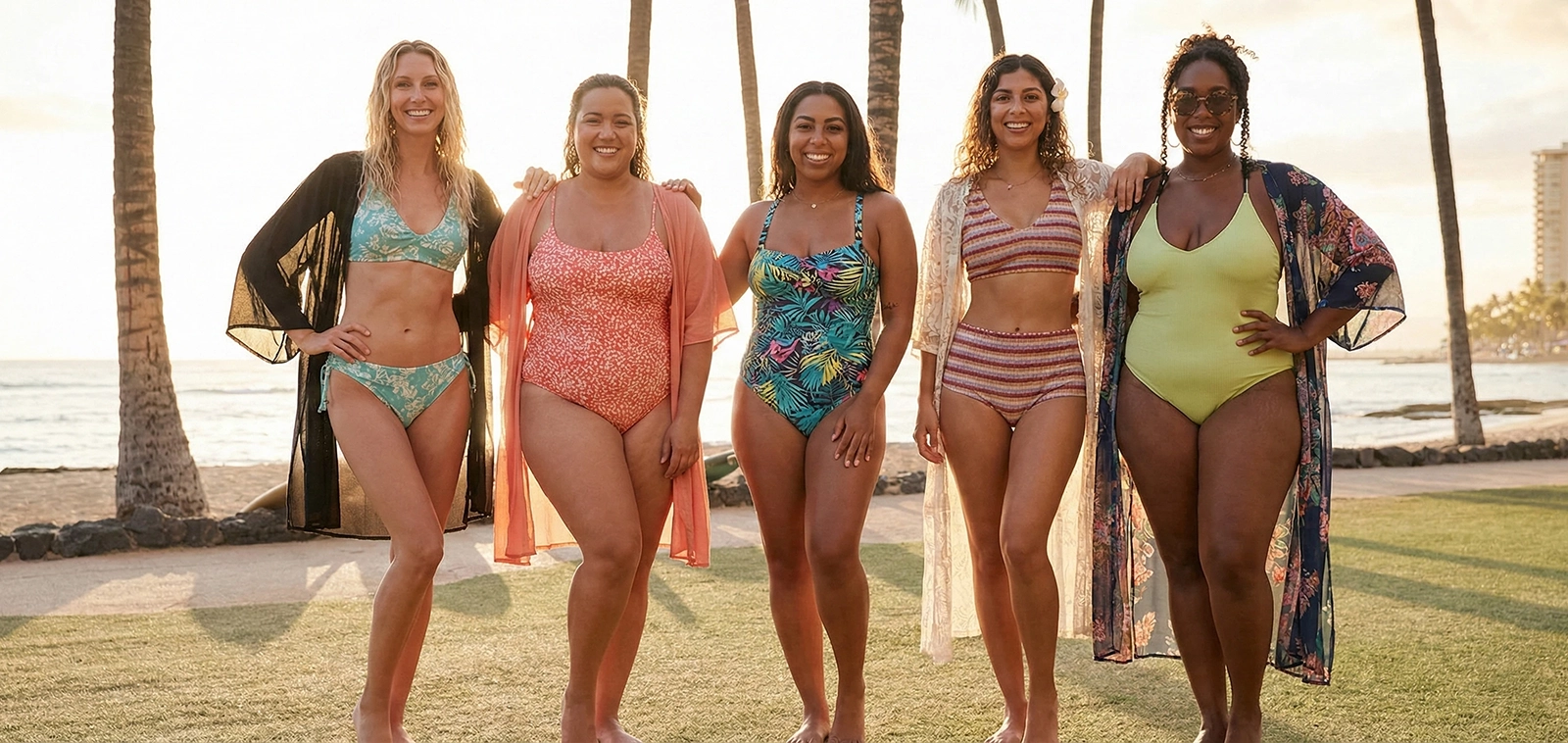
Curious about your silhouette? Forget the hang-ups: knowing your body shape is the foundation of a style that truly flatters you. From A, V, X, H to O, it isn’t always easy to figure out where you fit in… Simply enter your measurements into our body shape calculator to finally discover your match, and find looks that truly work for your body.
Why identify your silhouette?
Knowing your body shape is the key to a wardrobe that works. This approach isn’t about correcting or hiding anything, but rather revealing the best of your figure. Understanding your body’s proportions allows you to make informed style choices and shop smarter.
Calculate your body shape: the simple method
How does it work?
- Enter your shoulder, bust, waist, and hip measurements.
- The calculator analyses the proportions between these figures.
- It indicates which body shape you lean towards (A, V, X, H, or O).
The calculator gives you an objective starting point. You can then refine the result by observing your silhouette in front of a mirror and testing out the style advice tailored to your profile.
How to take your measurements correctly
For the calculator to be reliable, it is essential to take your measurements properly. Grab a flexible tape measure and stand in your underwear in front of a mirror to check the tape’s position.
- Shoulders: Measure the circumference at the widest part of your shoulders, passing across your shoulder blades. The tape must remain perfectly horizontal.
- Bust: Place the tape around the fullest part of your chest, wrapping it around your back. Keep your arms by your sides and breathe normally—don’t puff out your ribcage.
- Waist: Find your natural waist (the narrowest part of the torso, usually a few centimetres above the belly button) and measure without pulling too tight. You should be able to slide a finger between the tape and your skin.
- Hips: Measure around the widest part of your hips and bottom, often level with the pelvic bones. Again, ensure the tape stays parallel to the floor.
Note these four measurements carefully, then enter them into the calculator: they form the basis of your analysis and will ensure you get the most accurate result possible.
The Women’s Body Shape Calculator
To make life easier, we have integrated a dedicated body shape calculator. Simply enter your measurements to get an instant indication of your silhouette (A, V, X, H, or O), then you can explore the style tips tailored specifically to your profile.
Body Shape Calculator
Enter your measurements below to reveal your dominant silhouette profile.
Analysis Complete
The 5 main female body shapes decoded
The A-Shape (Pear)
Characterised by hips that are wider than the shoulders, the A-shape typically features a defined waist and a narrower bust. The thighs and bottom are often curvaceous, creating a feminine and harmonious silhouette.
To flatter this shape, the goal is to create balance by drawing attention to the upper body. Structured tops, statement necklines, and lighter colours on the bust achieve this effect perfectly. Jackets that nip in at the waist and straight-leg or slightly flared trousers complement this silhouette beautifully.
Avoid cuts that are too tight across the hips, and opt for fluid fabrics for your lower half. Horizontal stripes on top paired with vertical lines on the bottom create a lovely visual rebalancing.
The V-Shape (Inverted Triangle)
For women, the V-shape is distinguished by shoulders that are broader than the hips, creating an athletic and dynamic silhouette. The bust is often fuller, and the waist definition can vary.
The stylistic aim is to soften the shoulder line while creating volume around the hips. V-necks or scoop necks soften the frame, while flared trousers or A-line skirts balance out the proportions.
Wearing darker colours on top and lighter shades on the bottom will visually invert your proportions. Avoid shoulder pads and high necks (like turtle necks), as these tend to accentuate shoulder width.
The H-Shape (Rectangle)
Balanced between shoulders and hips, the H-shape features an undefined waist, creating a long, lean, and slender silhouette. Thanks to its harmonious proportions, this body type can pull off many different cuts.
To create the illusion of a more defined waist, rely on belts worn at the natural waistline and fitted cuts. Crop tops, cropped jackets, and tucking your tops into your trousers will help structure the silhouette.
Straight-cut dresses and jumpsuits naturally highlight the elegance of this shape. Play with layering and colour blocking to add depth and interest.
The O-Shape (Apple)
The O-shape is characterised by curves concentrated around the midsection, often with slender arms and legs. This silhouette calls for cuts that elongate and structure the body.
Prioritise empire lines that fall from just below the bust, fluid tops, and long, open cardigans. Straight-leg or slightly bootcut trousers will lengthen the leg, while swing dresses create a lovely, feminine outline.
Avoid cuts that are too tight around the tummy; instead, choose fluid fabrics that glide over your curves. V-necklines work wonders to elongate the bust and create flattering lines.
The X-Shape (Hourglass)
The ultimate balanced morphology, the X-shape features shoulders and hips that are aligned, with a very defined waist. This hourglass figure is considered naturally harmonious and suits a wide variety of styles.
The goal is to highlight this natural harmony without throwing it off balance. Fitted cuts, bodycon dresses, and waist-cinching belts showcase these ideal proportions. Tailored jackets and tops that hug the body reveal the beauty of this silhouette.
Be careful with excessive volume, which can hide your natural assets. Stick to cuts that follow your curves without constricting them.
FAQ – Your questions about female body types
Can you have more than one body shape?
It is common to fall between two morphologies or to have mixed characteristics. In this case, take inspiration from the advice for both profiles, prioritising the tips that feel right for you.
Does a woman’s body shape change with age?
Your base bone structure remains stable, but your proportions can evolve with weight fluctuations, pregnancy, or age. It can be useful to reassess your profile periodically.
What if I don’t like my body shape?
Every morphology has its unique assets. Focus on your strengths rather than what you perceive as flaws. Self-acceptance is the first step towards a style that makes you feel confident.
How do I adapt these tips to a specific style?
Morphological principles can be adapted to any style. Whether you prefer casual, chic, or rock aesthetics, there are always ways to reconcile your personal taste with cuts that flatter your figure.